Fix a skirt lining that slips below the outer hem
If your skirt lining hangs below the hem, check where it starts slipping before shortening it. A detached waist seam, a tight lining and an overlong free hem need different repairs. Compare the skirt standing, sitting and after walking; alter the lining only after the outer skirt hangs correctly.
Scovely editors · November 21, 2026 · Updated 2026-11-21
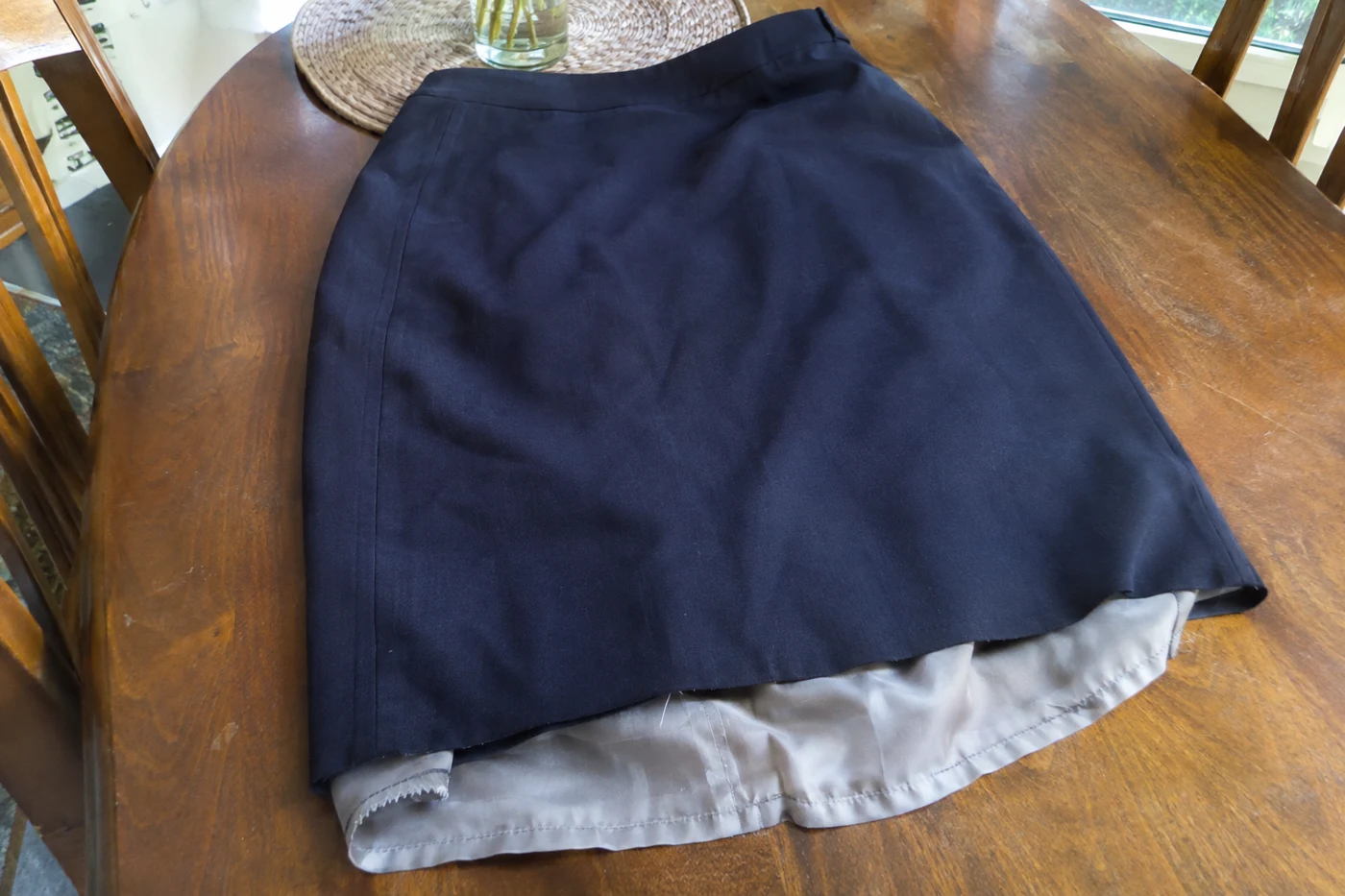
Is the lining too long, or is something moving?
Turn the skirt inside out on a table. Find where the lining joins the waistband, facing and zipper. Look for an open seam, a broken thread chain or lining folded into a fastening. Do not cut anything yet. A lining that has dropped from its top attachment can look too long even though its original hem is correct.
Next put the skirt on with its usual underlayer. Set the waistband at its intended height, then compare front, back and both sides. Take it off before placing loose thread markers at the points you want to compare. Pins should never remain in a garment during the sitting test. If the entire skirt rotates, first use the skirt twisting diagnosis; a shorter lining will not straighten an unstable waistband.
Repeat a short walk and sit down once. Record which layer changed position. A lining visible evenly around the skirt while standing suggests a length problem. A lining that gathers above the knees and then drops unevenly suggests drag or restricted movement. If only one side hangs down, inspect the attachment on that side before changing the whole circumference.
Which repair matches the observation?
| What you see | Inspect first | Sensible next step |
|---|---|---|
| Lining lower on one side even on a hanger | Waist and zipper attachment | Restore the original support before measuring |
| Lining exposed evenly with shell hanging straight | Separate lining hem | Baste a shorter hem and retest |
| Horizontal strain when sitting | Hip room and vent opening | Ask a repairer about width or a replacement lining |
| Outer hem pulled upward at one seam | Short or tangled connecting tack | Have the connection released and remade with ease |
| Shell and lining spiral together | Cut, grain and skirt fit | Diagnose the skirt rather than trimming its lining |
This comparison is a practical diagnosis, not proof from one photograph. Try one change at a time so you can reverse a mistaken assumption. A smooth slip may reveal friction, but it cannot add missing circumference to a tight lining.
How far above the skirt should the lining finish?
The construction determines the clearance. In its skirt lining instructions, Burda describes a lining finishing 2 cm shorter than the skirt. Treat that as a construction example, not a mandatory distance for every garment. A sheer outer fabric, deep vent or curved hem may need another arrangement. Check what becomes visible when you sit and step forward.
Measure the actual clearance at four points with the skirt hanging freely. For an illustrative repair, suppose the lining projects 8 mm below the shell and you want it to finish 20 mm above it. The finished lining edge would need to rise 28 mm at that point. This is the change in finished position, not automatically the amount to cut: the new turn-under still needs fabric. Check every point before marking a cutting line.
On a flared lining, folding a deep hem upward brings a wider edge toward a narrower part of the skirt. The excess can pucker. On a tapered lining the opposite mismatch can pull. Choose a narrow finish suited to the fabric, or ask a tailor to reshape the hem. The reversible hand hem guide explains why a provisional fold is useful before a permanent cut.
Can you shorten it without changing the outer skirt?
For an ordinary lining with a free lower edge, work on that layer separately. Photograph the original construction first. Mark the proposed finished edge, baste it loosely with the skirt off, and check it from outside. Keep the skirt shell clear of the needle. A lining joined into a vent, pleat or enclosed hem needs its own construction assessed before unpicking.
Test the basted arrangement with the same shoes and underlayers. Walk, sit, climb a step and inspect the back vent. Stop if the lining now pulls the outer fabric, restricts your stride or exposes an unfinished edge. Do not solve that restriction by sewing the lining tightly around the shell hem. The layers need enough independence to move.
If the lining has separated at the waist, locate sound fabric before reattaching it. A ripped allowance may need reinforcement rather than another row of stitches through the damaged edge. Preserve original pleats and ease. Keep the zipper teeth and slider clear. Structural damage near a closure is a good point to hand the repair to an alterations professional.
What changes for a bias-cut skirt?
A bias-cut shell can settle differently from its lining. Compare the garment after it has hung freely rather than smoothing it flat and treating that as its wearing length. Read the bias-cut skirt hanging checks before leveling either layer. Do not pull a diagonal edge to force it to match the other side.
If the care label allows cleaning and the skirt needs it, deal with that before setting a permanent length. Follow the label rather than wetting an unknown lining to test shrinkage. If one layer has already shrunk, shortening the other layer may hide the immediate mismatch but will not restore the original construction.
Take a useful note to the repairer
Write down the four resting clearances, whether the lining drops or rises during movement, and the exact seam where the problem starts. Include a picture of the skirt hanging and a close view of the inside attachment. Ask for the lining to clear the shell through movement while preserving the vent and sitting room. That brief is more useful than asking for an arbitrary inch to be removed everywhere.
Watch the technique
Minerva · How to Line Any Skirt | Sewing Tutorial
Play demonstration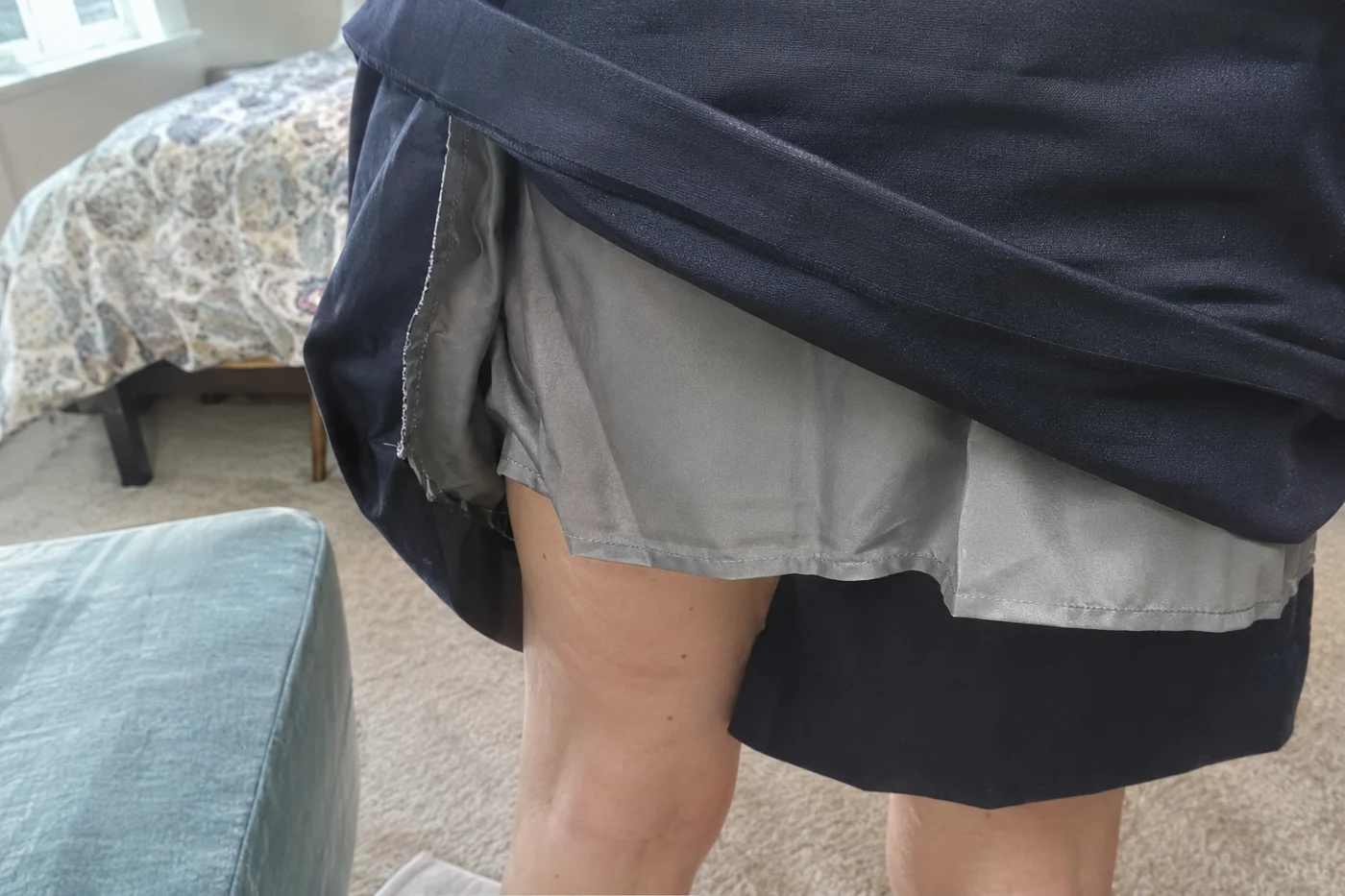
 Repair bench
 Repair bench
 Fit room