What to do when a sweater starts to pill
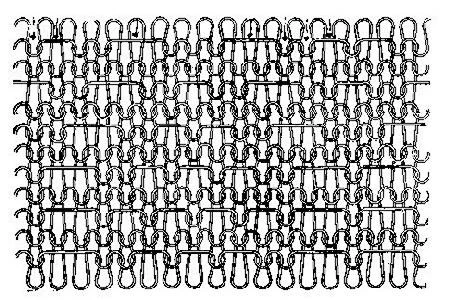
A pill is a small knot of loose fibers tangled at the surface of a fabric. Before removing one, look at the knit beneath it. A few pills on sound, springy cloth are a grooming job. A thin elbow with open stitches needs support or repair. Taking off the fuzz cannot put the missing yarn back.
Scovely editors · November 19, 2026
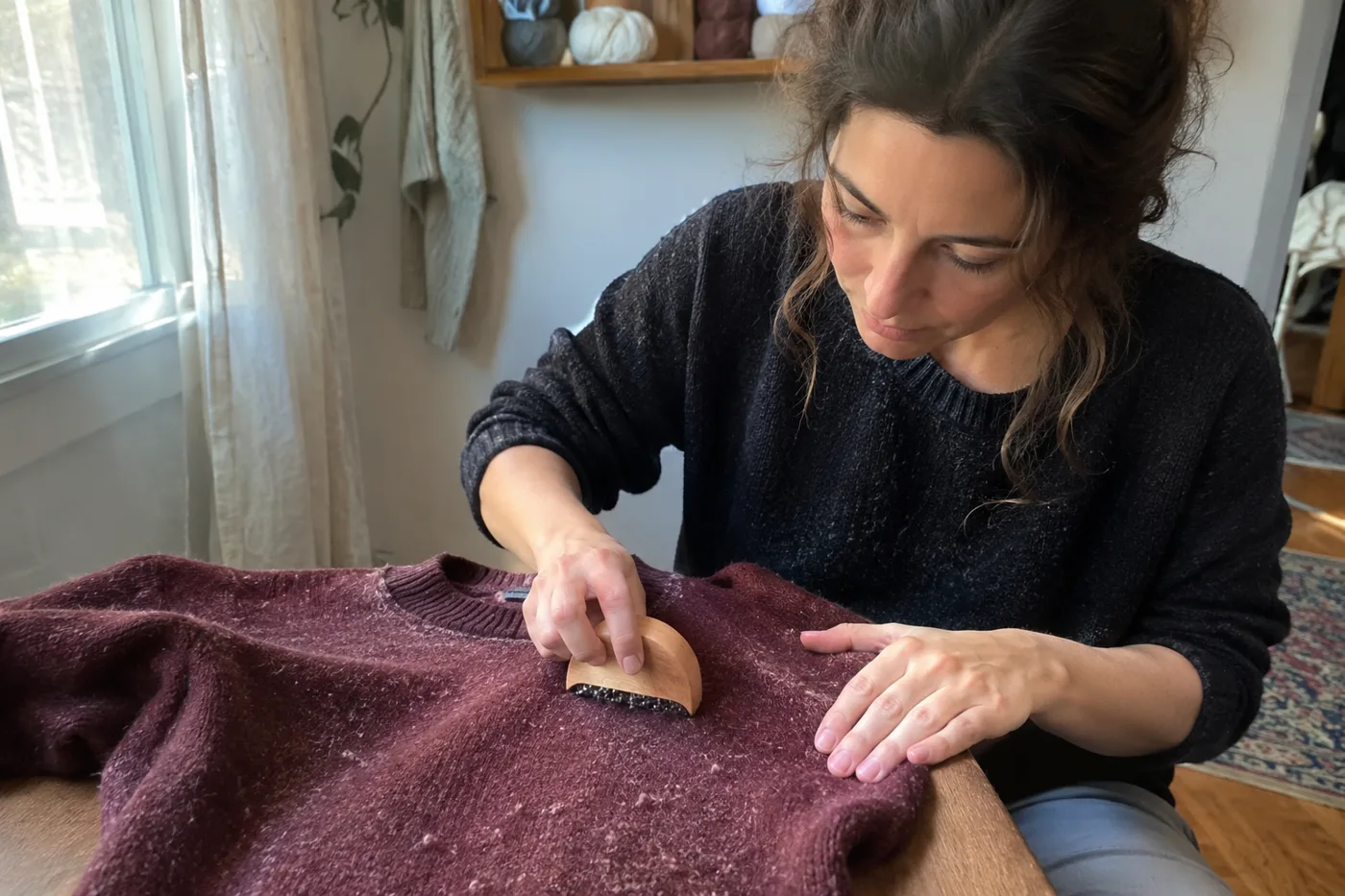
Map the rubbing points
Spread the dry sweater on a clean, well-lit table. Compare the front with the underarms, the side where you carry a bag and the area where a seat belt crosses. Pills concentrated along one of those lines tell you something about friction during wear. They don't tell you the garment's price, fiber purity or remaining life.
Turn the sweater inside out and look at the same areas against light. A loose end may be part of a pulled loop rather than a pill. If the strand visibly connects to the knit in a long continuous loop, leave it for a knit repair rather than clipping it. On a fuzzy brushed sweater, the halo is part of the fabric. Decide how much of the original texture you want to retain.
Work on a hidden patch first
With a sweater comb intended for that knit, support the fabric flat with one hand and make a light, short pass over a small concealed area. Lift the comb and inspect. Heavy pressure or repeated scraping can remove good fiber along with the pill. Don't comb across raised cables, rib edges or open lace as if they were a flat panel.
A guarded fabric shaver is another option on suitable dense, smooth knits. Follow its instructions, keep the surface flat and stop well before a seam or fold. A raised ridge can enter the cutting area even when the rest of the panel feels firm. Avoid using an exposed razor. Pulling a pill hard with your fingers can draw a longer strand out of the sweater.
Check your stopping point
Walk back from the table and look at the whole garment after treating one small section. The goal is a surface you are happy to wear. Chasing every tiny speck is an easy way to create an unnaturally smooth patch. Remove the loose lint and compare the test area with the surrounding fabric by touch and by sight.
Wash only as the garment label permits and reshape while supported if instructed. A rough towel, heavy zip or hook in the same wash can create fresh abrasion. Store a sweater once it is clean and dry, and check whether a bag strap or rough jacket lining is responsible for repeat pilling on one side.
Repair or live with it?
Spend a few minutes on the most visible friction areas first. If the sweater looks better and the fabric underneath is sound, that may be all it needs for the season. If the fibers are so short and loose that every pass uncovers thin spots, stop grooming it. A repair at one worn elbow can be worthwhile; repeatedly shaving an entire weakened body will mostly reveal the wear faster. Photograph the same spot after a few wears to judge the result rather than guessing from one afternoon.
 Repair bench
 Repair bench
 Fit room