How to read the shoulder of a blazer
A blazer shoulder can sit precisely at your shoulder bone, extend beyond it or slope softly away from your neck. All three can fit. The telling details are whether the sleeve hangs as intended, the collar stays close and you can reach forward without fighting the jacket.
Scovely editors · November 19, 2026
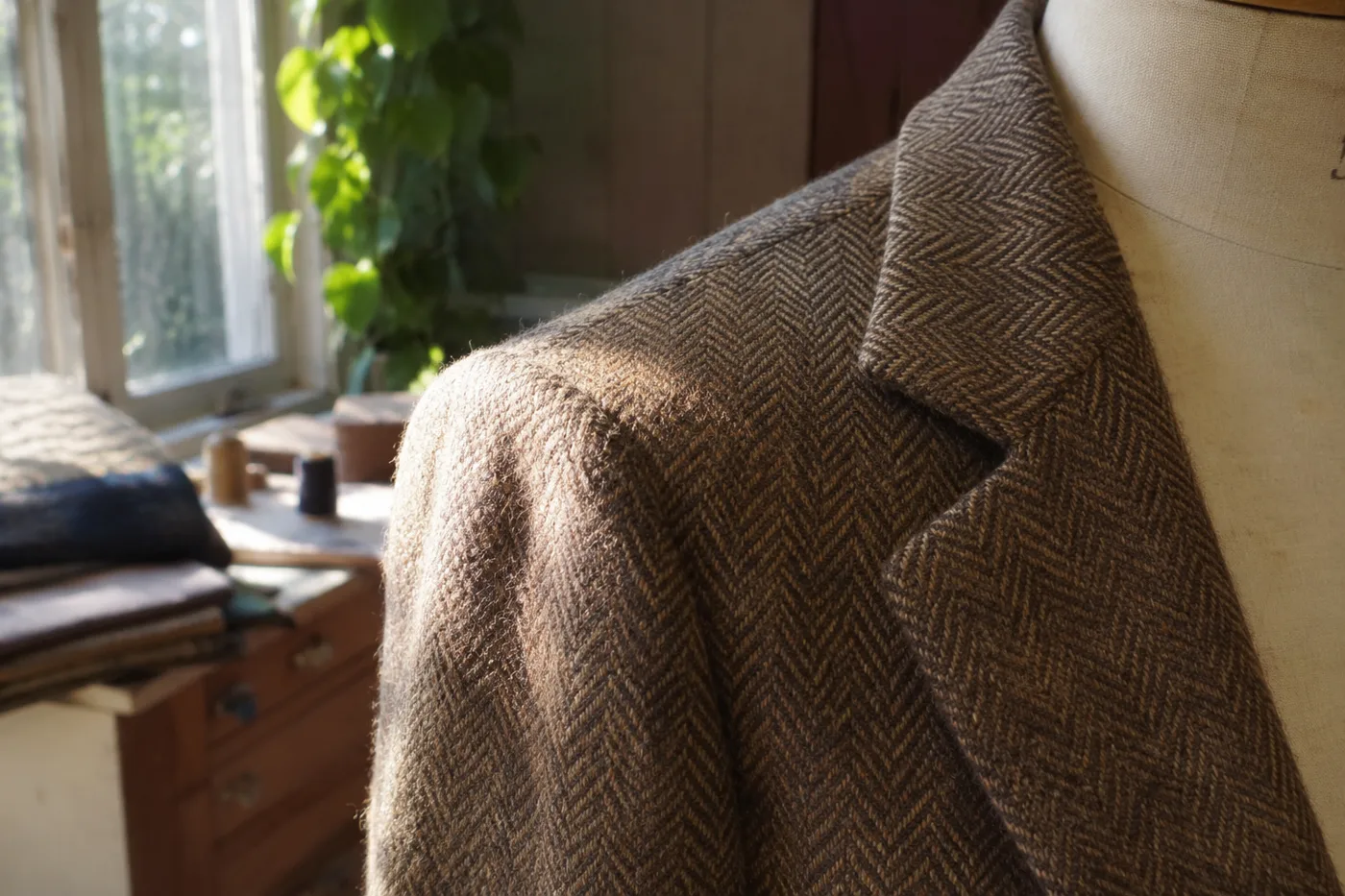
Look at the jacket before you put it on
Feel the sleeve head between two fingers. A firm roll and a padded shoulder are meant to draw a defined outline. A soft, unlined shoulder often follows the body more closely. A deliberately dropped seam on an unstructured blazer is part of its design. Comparing it to a formal jacket as if both seams should end in the same place can send you to the wrong size.
Wear the layer you will normally have underneath and empty the pockets. Settle the collar gently at the nape and let your arms hang. Look from the back. The collar should remain in contact without pushing into your neck. Follow the line from neck to sleeve. A hollow just below the outer edge, especially if the seam projects well past your arm, is a reason to try another shoulder shape.
Separate width, slope and sleeve angle
Try the next size down if both shoulders collapse at the ends. If the smaller size cleans up the shoulder but the lapels bow or the back binds, move to a different cut. A narrower shoulder paired with a fuller chest may suit you better than either size in that model.
Diagonal wrinkles near the neck can reflect a mismatch in shoulder slope. A twist down an otherwise roomy sleeve can come from the angle at which it was set. Neither observation is a diagnosis from a single photo. Let your arms return to their natural resting position and compare another blazer on the same shirt. If the second jacket hangs cleanly without any conscious change in posture, remember that difference.
Test it in the positions you use
Fasten the intended button and shake hands with an imaginary person across a desk. Sit down, unbutton if that is how you wear a jacket, and reach for a keyboard. Some lift is normal in a tailored sleeve. If the entire body follows your arm and the collar climbs far up your neck, check armhole depth and ease across the back. An oversized body with a low armhole can restrict movement surprisingly early.
Choose the alterations in the right order
Sleeve length and waist suppression are useful conversations once the shoulders and neck work. Shoulder reconstruction involves the sleeve head, lining and often padding. Get a specific quote before buying a jacket that needs it. Take photographs with your arms relaxed and tell the tailor what feels tight during movement. A pretty still image can hide the exact problem you want corrected.
For a secondhand jacket, check both sides for flattened padding, puckering or a previous alteration. Button it and hang it level afterward. A persistent dent on the hanger as well as on your body points to the garment itself. Decide whether you actually enjoy its silhouette before paying to turn it into another one.
 Fit room
 Fit room
 Silhouettes