How to spot a bias-cut skirt that hangs well
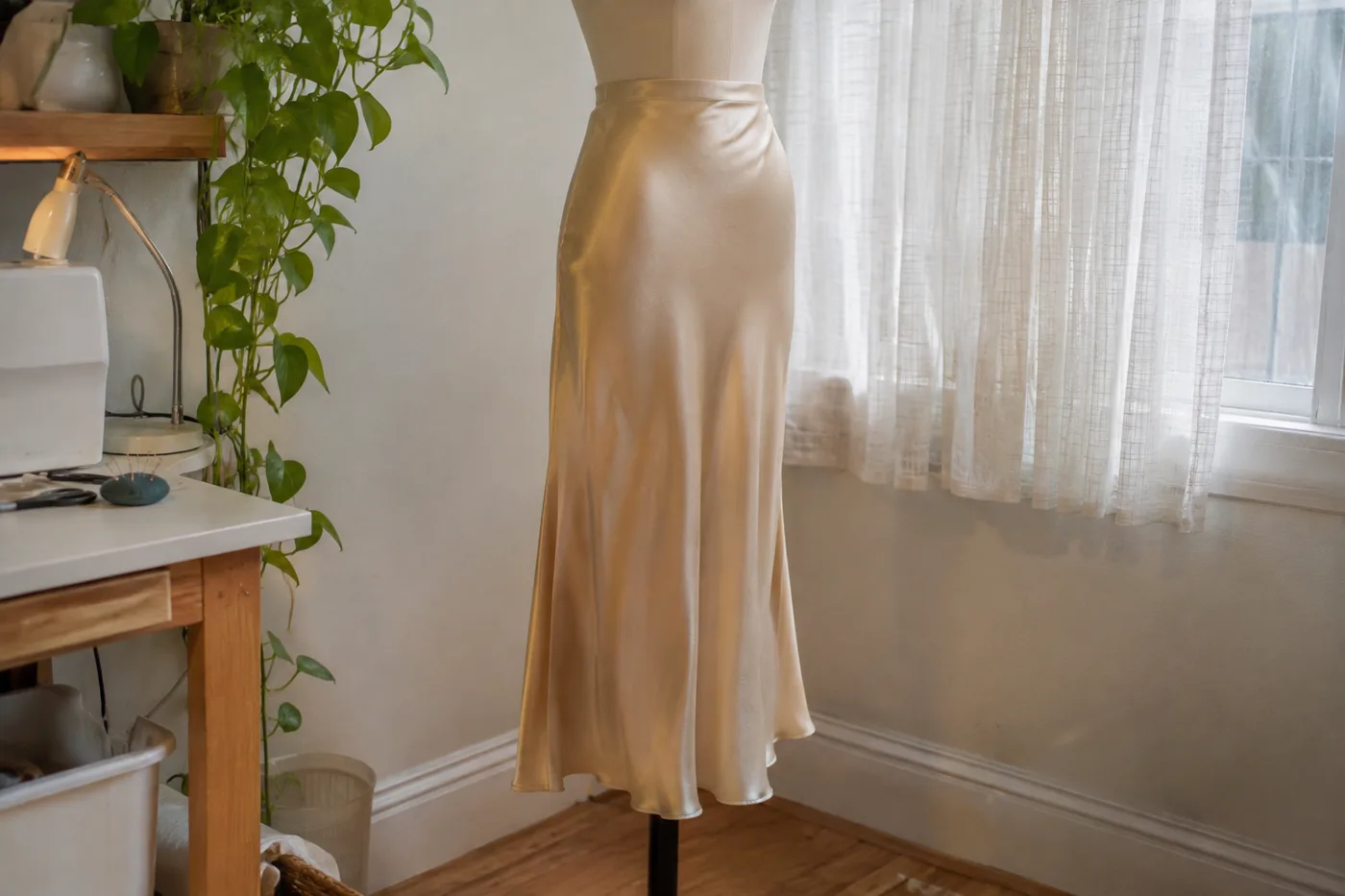
In a bias-cut skirt, the pattern is set diagonally to the lengthwise and crosswise threads of woven fabric. That diagonal gives more readily than the straight grain, so the skirt can follow a curve with relatively little shaping. Look at how the cloth hangs and recovers. A shiny surface alone tells you nothing about the cut.
Scovely editors · November 19, 2026
Trace the weave before reading the silhouette
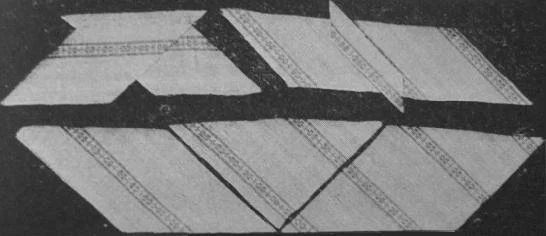
Look at the back of the hem or a seam allowance in good light. Trace a visible yarn with your eye. In a simple bias panel, the yarn runs diagonally relative to the long line of the skirt. A printed diagonal stripe is unreliable evidence, since a print can be placed at any angle. In a paneled skirt different sections may be cut in different directions deliberately.
Hold the skirt by the waistband with the fastener closed. Allow a crumpled garment time to fall. One low point could be uneven hanging length, a distorted seam, or an intentional asymmetrical hem. Look for repeated shape and symmetry in the panels before deciding that something has been cut badly.
What happens over the hip
Wear the underwear you plan to use and position the waistband at its intended height. A bias skirt can slide over the hip and become narrower and longer as it hangs. If it is stretched tightly around the hips, the hem can lift and diagonal ridges can appear. Compare a size up without changing the waist position. Does the surface become fluid, or does the skirt just slide farther down?
Separate the lining from the outer fabric. If the shell suddenly relaxes, the lining may be catching or pulling. Try it over bare legs and your usual tights. Cling caused by friction is different from a seam permanently puckered by stitching. A slip can change the first problem while leaving the second completely visible.
Look at the seams in motion
Walk away from a mirror and turn. A bias skirt should move, so a ripple with every step is part of the attraction. The question is whether a rope-like ridge remains along the same seam when you stop. Look at it on the hanger, too. Lift the hem slightly to take weight off the seam and release it. A rigid stitch line beside an extensible cloth may restrict the drop.
For a new hem, let the skirt hang until its length settles before marking. Ask the tailor to mark from the floor while you wear the correct shoes and stand naturally. Measuring the same distance up from an already uneven edge just reproduces its unevenness. A narrow finish often suits a fluid skirt; a bulky turn-up changes its weight.
When to bring it home
Keep the skirt whose side seams return to a balanced position after sitting and whose surface looks good in daylight from several angles. Check the care label before deciding how to hang or store it long-term. If the fabric is delicate, look at the stress points beside the zip in particular. Small openings between yarns at those points are a structural issue. A larger size on a damaged secondhand skirt cannot reverse existing seam slippage.
 Silhouettes
 Silhouettes
 Repair bench