Fitting a wrap dress that stays closed
A wrap dress stays closed when the neckline, waist ties and skirt overlap all work together. A tighter knot can secure a loose tie, but it cannot add fabric to a wrap that separates when you sit. Test the bodice and the skirt independently before adding a snap.
Scovely editors · November 19, 2026
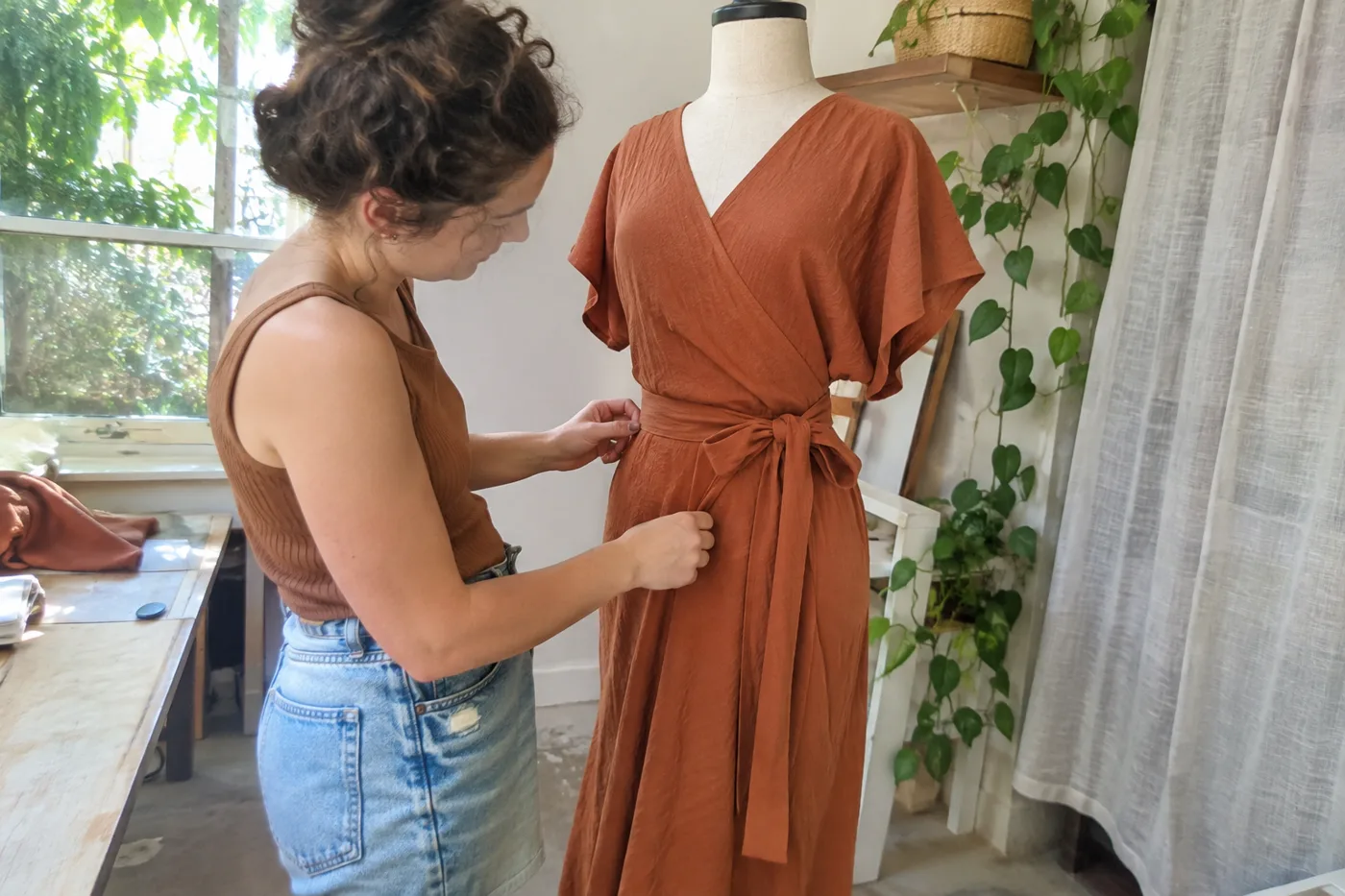
Tie it as the pattern intends
Find the opening for the inner tie, or the internal button if there is one. Lay the inside panel across the body, take the tie through its opening without twisting it, then close the outside panel. Set the tie at the dress's designed waist. If you have to pull it far above or below the waist seam to make the neckline sit flat, the bodice length may be wrong.
Look at where the side seams fall after tying. A seam dragged toward the front can mean one panel is being asked to cover too much. Loosen the tie and spread the fabric evenly. Some faux-wrap dresses have a fixed waist and an ornamental tie. On those styles the knot has almost no effect on fit.
Test the neckline with your hands free
Stand straight, reach forward, then lean over as if placing a bag on the floor. A small amount of movement is normal. Notice whether the edges lie flat again when you straighten or whether the neckline rolls away even at rest. A stretched bias edge, excess bodice length and insufficient bust room can all create an opening. They leave different clues.
If the bust is comfortable and the crossing points align easily, hold the fronts together at the desired height. A tiny catch or snap may work if neither side is under tension. Mark both positions separately with the dress on, then take it off to sew. Test on the inner layers and check the right side for dimpling. If closing the fronts makes the waist seam climb or flattens the bust, try a fuller bodice or a different size.
Test the skirt without holding it shut
Sit, cross a leg if that is how you normally sit, climb a step and take a long stride. Note the lowest overlap that remains in each position. A neat wrap standing can open high on a car seat. Holding the skirt with one hand disguises the problem you came to diagnose. Decide how much coverage you want for the actual activity, including wind outdoors.
A hidden fastening can help control a loose edge in one position. It cannot safely hold together two panels that need to move far apart to let you walk. For persistent exposure, a deeper overlapping panel, a sewn faux wrap or a different cut is a better starting point. A slip can provide coverage if you like that look, though it will not change the overlap itself.
Keep the movement that drew you to it
Try the proposed fastening with loose basting, then repeat the whole test. If the skirt now pulls diagonally toward that stitch, take it out. On a successful fit the ties hold without digging in, the neckline recovers after a reach and the skirt still swings when you walk. Write down the tie position and skirt opening on the dress you like. It gives you concrete points to compare in online photos or with a sewing pattern.
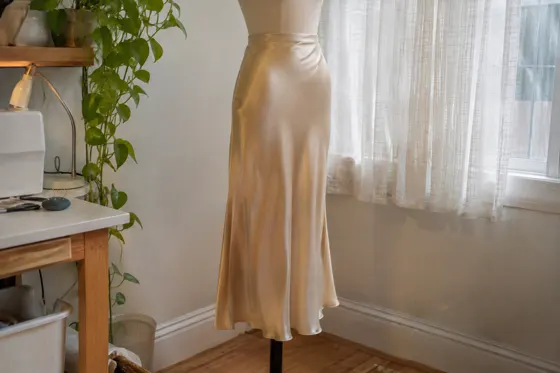 Silhouettes
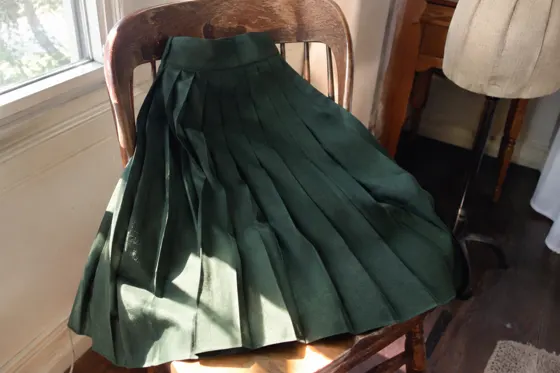 Silhouettes
 Repair bench