How to choose and wear a pleated skirt
Pick up a pleated skirt by its waistband and let it drop before you try it on. That first movement shows you the designer's starting shape. A knife pleat folds repeatedly in one direction. A box pleat opens out from two opposing folds. Narrow accordion pleats spread like a fan. They can all change width when you move, but they distribute fullness differently.
Scovely editors · November 19, 2026
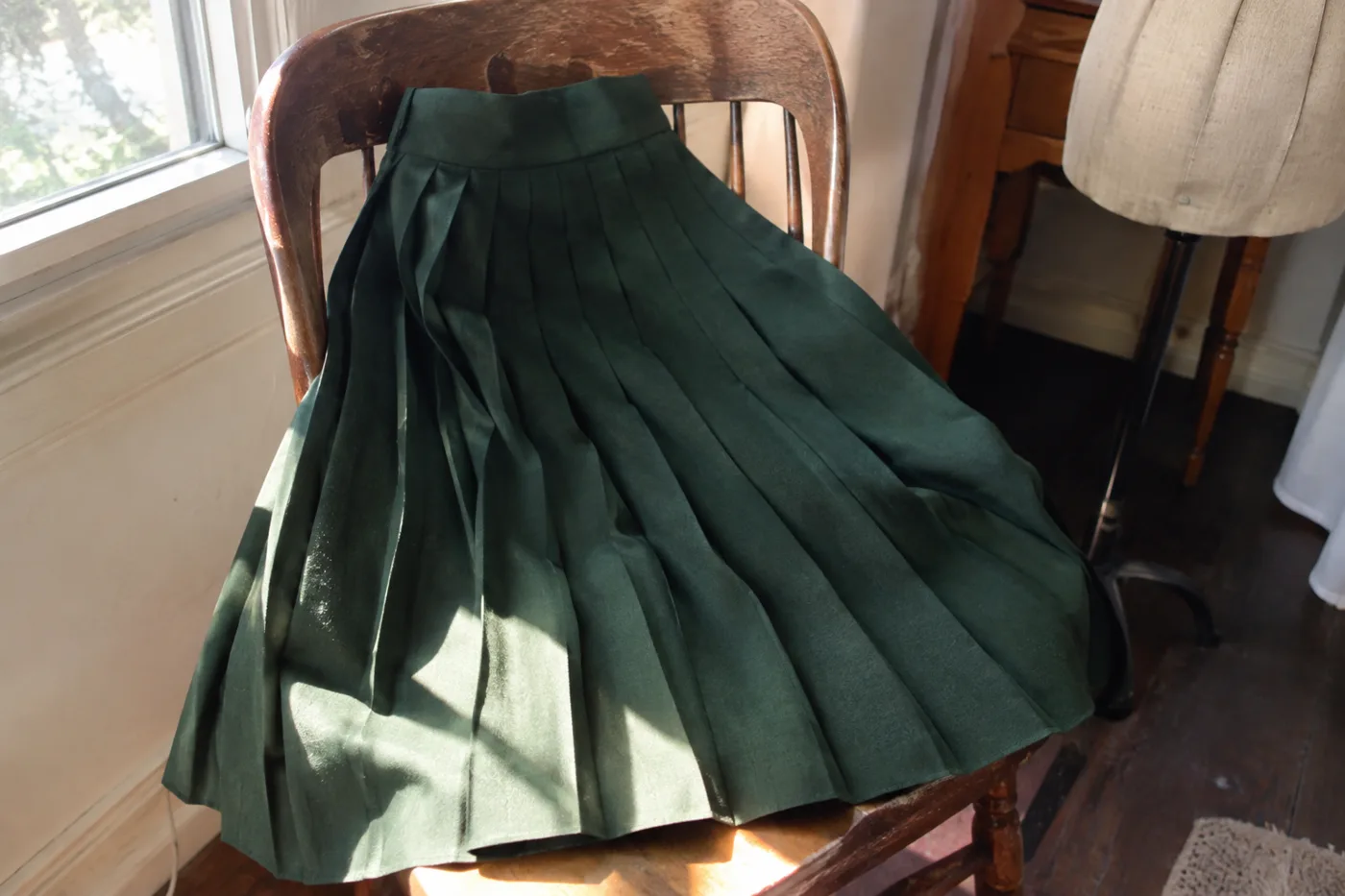
Find where the fullness begins
Run a finger down one fold. Some pleats are stitched closed for a distance below the waistband. The skirt lies relatively close where the stitching ends, then opens into movement. If that release point falls against the fullest part of your hip and the stitching strains, try another size or a skirt with a higher release. A pleat that stands open in a dressing room will rarely settle flatter once you start walking.
On an allover finely pleated skirt, look at the distance between the ridges at the waist and lower down. If they open evenly, you will see a gradual change. Pulling in just one area can come from the lining or a narrow waistband. Check each separately. A roomy shell over a tight lining can look full while restricting your stride.
Try a top three ways
Start with a thin top tucked in once, keeping the fabric smooth at the sides. Note where the eye meets the top of the pleats. Try the same top untucked, then fold the lower edge under to preview a shorter length. A hem that lands directly on the pleat release can push folds outward. Moving it a little can change the outline more effectively than exchanging the skirt.
For a sweater, try a cropped shape or let it hang freely. A thick bundle inside an elastic waistband may tip the band and make the skirt appear uneven. View it side-on with your arms down, then put your coat on. A rough coat lining can lift a lightweight pleated skirt as you walk.
Inspect the folds on a secondhand skirt
Compare a concealed fold near the side seam with one at the seat. A softened seat may be part of the fabric's character. If the pleats must look sharp for the outfit to work, check the care label and ask a cleaner what can be restored. Pressing every fold by eye is a substantial job. Heat can mark a synthetic permanently, and a pleat that was set in manufacture may not return with a household iron.
Sit normally for a minute, stand, and let the folds settle. Watch which creases remain after that ordinary use. This is more informative than squeezing a fistful of fabric, which subjects every layer to pressure it may never encounter in wear.
Choosing the length
Pin the skirt upward temporarily at the waistband or fold a single section of hem with the garment off. Look at the width as well as the length. On a flared pleat the lower section is wider, and simply turning it up can add bulk. Ask about preserving the original finish before buying a skirt that needs shortening. For travel, follow the label and pack the folds in their natural direction. Put it on a hanger when you arrive, then decide whether any further care is necessary.
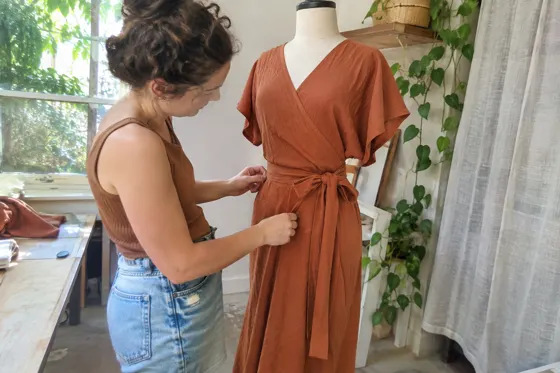 Silhouettes
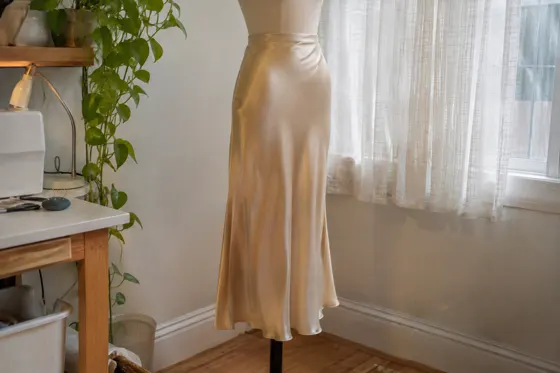 Silhouettes
 Cloth notes