Why a skirt twists as you walk
If a skirt's side seam keeps traveling toward the front, mark where it starts and watch when it moves. A skirt that rotates as a whole at the waist needs a different adjustment from a panel that spirals while the waistband stays in place.
Scovely editors · November 19, 2026
Establish a starting line
Stand on a level floor with shoes on. Set the waistband where you normally wear it. Check the center front against the center of your body and let the fabric fall without smoothing it diagonally. A strip of removable tape on a base layer can mark where the side seam began. Walk down a hallway, turn, sit and stand. A skirt that needs resetting after each of those actions is telling you more than a mirror pose can.
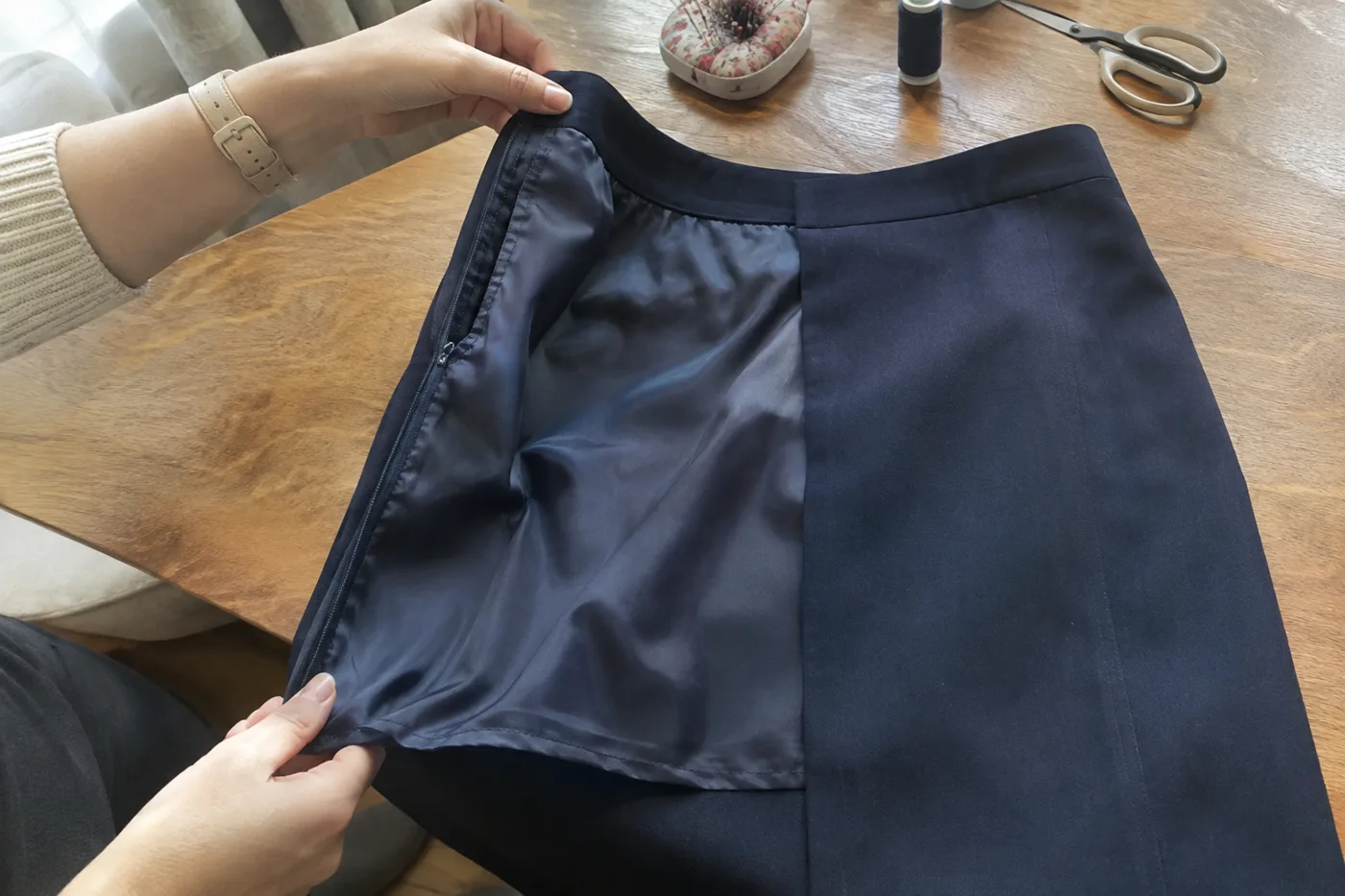
Check the lining. Reach inside and separate it from your tights or slip. A lining caught in a slit, turned at a waist seam or clinging to one thigh can drag the outer shell around. Try the skirt with a smooth slip or different underlayer. If it immediately stops traveling, you have learned something useful without altering the shell.
Inspect the cut and the fastening
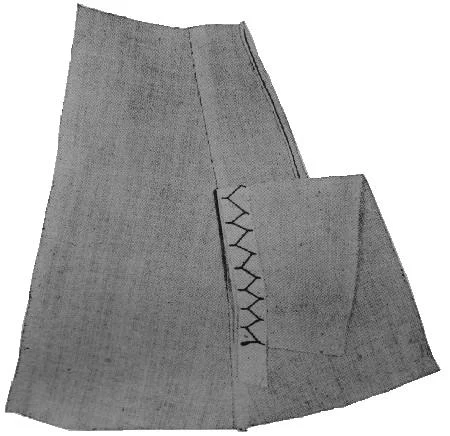
Lay the skirt flat with the waistband at ease. Match the center front and back, then compare the two side seams. A curved seam can be intentional. What deserves a closer look is a hem that corkscrews on one side or a stripe that runs diagonally down one panel of an otherwise straight-cut skirt. A fabric cut or sewn off grain may keep twisting even on a hanger.
Zip up slowly and look at the area below the zipper. Does one seam appear shorter or more puckered than the other? A stiff replacement zipper or lining sewn into the seam can distort a light skirt. On a bias skirt the fabric itself is meant to lie diagonally, so don't use a diagonal grain line alone as evidence of poor cutting. Compare the way both sides drop.
Make the smallest change that addresses the cause
If you can rotate the entire waistband with almost no resistance, a small waist adjustment may anchor it. Pin the change with the skirt off, then baste it before wearing it for the movement test. If the waist fits and the cloth stretches horizontally across one hip, try more hip room instead. Tightening the band above a tight hip often increases the drag.
For a lining that rides high, look at its width, length and attachments around the vent. Ask a tailor to evaluate these before recutting the skirt. For a visibly spiraling panel in a new purchase, compare a second example of the same skirt. If both twist on you but another cut stays straight, spend the alteration money on the better cut.
The final test
Carry the bag or wear the coat that normally goes with the outfit. A shoulder bag rubbing one hip or the rough inside of a coat can move a light skirt that hung perfectly indoors. Record the original position of the seam and where it ends after a real walk. That small piece of evidence is more useful at an alterations appointment than simply saying the skirt won't sit right.
 Fit room
 Fit room
 Cloth notes