How to judge linen before you buy it
Judge a linen garment by the cloth, the seam construction and how it looks after you move. Slubs and creases are often part of the appeal. A thinning seat, unstable buttonhole or seam with yarns pulling apart is a different matter. Texture alone proves neither fiber content nor quality.
Scovely editors · November 19, 2026
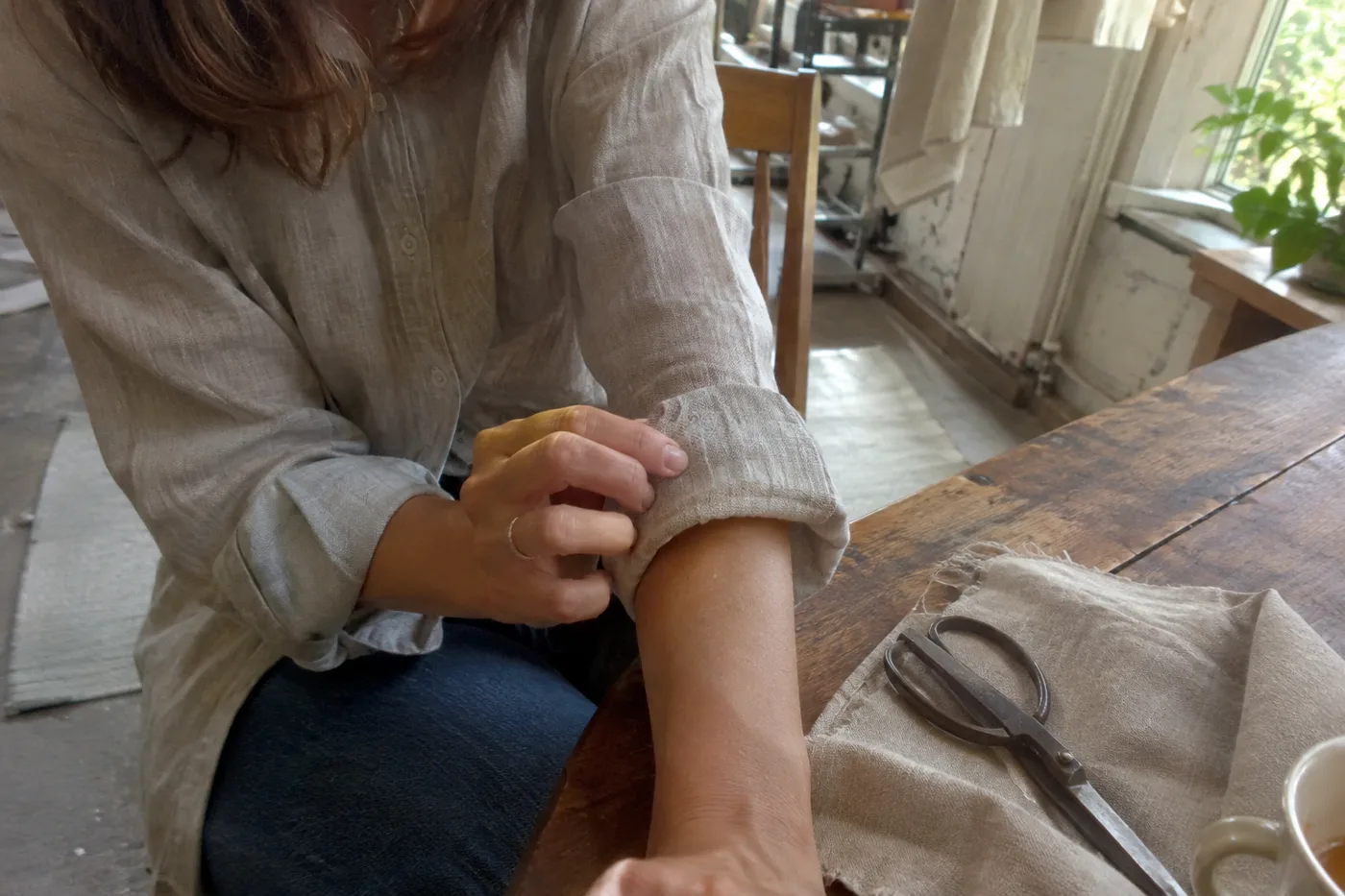
Read the label, then look through the fabric
Linen is made from flax. A blend may include cotton, viscose or another fiber and still have visible irregularities. Check the listed composition of the shell and the lining separately. A smooth lining can make a pale linen skirt more comfortable, but it also changes how much air moves around the legs.
Hold a single layer up to diffuse light. A visible open weave can be perfectly appropriate in an overshirt. At the seat of trousers it has different consequences for coverage and stress. Compare the same part of the garment in single and double layers, such as the trouser leg and the pocket bag. If the pocket edge shows sharply through the front, try the trousers with your usual underwear in daylight.
Distinguish a slub from wear
A slub is a thicker section of yarn within the weave. Look at the area from both sides. An occasional raised thread that continues through sound surrounding cloth is different from a run of missing or broken yarns. At a seam, look for threads pulling away from the stitch line. Don't tug them apart to test their strength. Compare the underarm with a protected area nearer the inside hem.
For secondhand linen, inspect elbows, inner thighs, seat and the folds around cuffs. Abrasion often shows as local thinning rather than a uniform softness. A dark patch that changes when you turn the cloth may simply be the light catching its uneven surface. A worn area tends to remain more translucent than its surroundings.
Give it a real crease test
Sit for a short time, stand up and look at where the creases settle. Decide whether you like the garment at that point. Crisp pressed linen in a shop is only one state of the material. A loose shirt can look better when the sleeves have softened into folds. A closely fitted pale skirt can develop sharp creases and pull across the lap, a combination that might not suit a long day at a desk.
Follow the sewn-in care label before washing or ironing. Trim, dye and interfacing determine what a finished garment can tolerate. Try pressing from the reverse with a cloth on an inconspicuous area. Avoid pressing a hard pocket outline onto the front of dark trousers.
Make an outfit work with the linen you chose
For a structured meeting, pair a relaxed linen shirt with a more stable trouser or jacket. For an easy summer set, compare the top and bottom after both have been sat in and handled. Similar color doesn't guarantee similar creasing. If buying online, ask for a daylight photograph against a contrasting background and a close-up of a seam. Those two pictures answer questions that a heavily styled image of a model often leaves open.
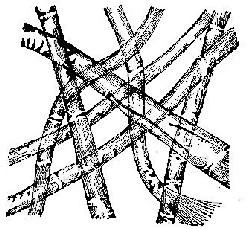
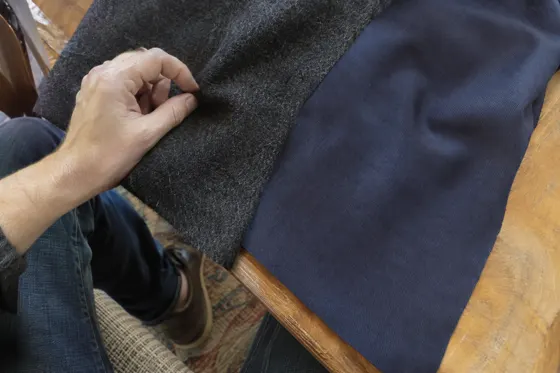 Cloth notes
 Cloth notes
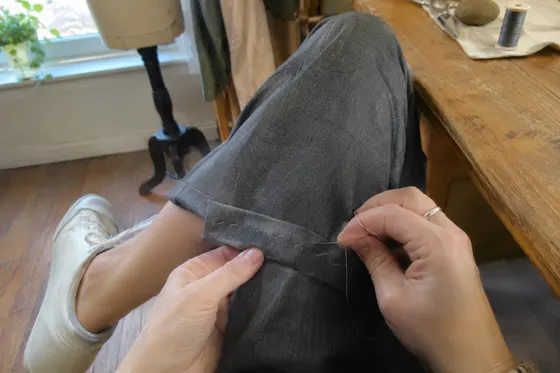 Repair bench