Woolen or worsted? Reading wool by its surface
Two jackets can both say pure wool and behave very differently. In a woolen yarn the fibers lie in a less orderly arrangement, often giving a softer, airier surface. In a worsted yarn the fibers are combed into greater alignment. That helps explain the smooth line of a suit and the soft outline of a woolen coat. The fiber label alone won't tell you which feeling you will get.
Scovely editors · November 19, 2026
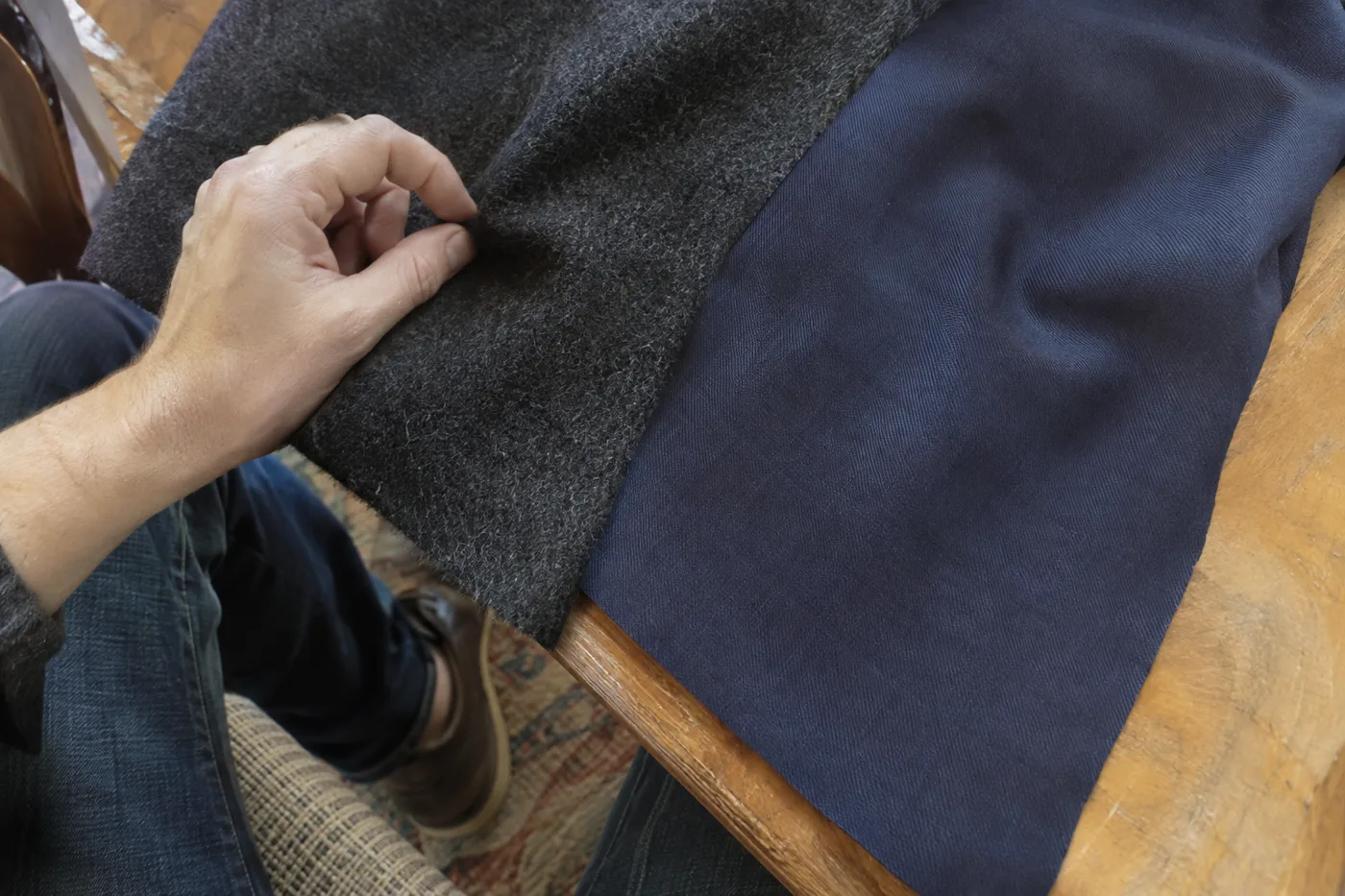
Look across the cloth
Hold a sleeve near a window and let the light skim sideways. On a smooth suiting you may see the weave clearly and a relatively crisp edge at the crease. A fuzzy surface can soften the outline of the threads. Brush a hand gently in both directions. A distinct change in shade can come from the direction of the surface fibers rather than from uneven dye.
Don't identify the yarn system from a photograph alone. Finishing can raise the face of a cloth, and a worsted flannel can still have a nap. Tweed refers to a family of cloths rather than a laboratory result. If the distinction matters for a purchase, ask the mill or seller for the actual cloth description.
Match the cloth to the job
A pair of office trousers that needs a crisp crease benefits from a surface that shows the crease cleanly. Look at how the lower leg falls over the shoe and whether the knee returns to shape after sitting. For an overshirt, a softer cloth can give a pleasant roll to an open collar. Fold the collar back and see whether it stands sharply or settles against your neck.
Warmth depends on the finished construction, lining, density and what fits underneath. A thin worsted suit and a thick woolen coat tell you little about what two garments of equal weight would do. Check air movement through a loosely woven sleeve and the coverage of the closure. These details matter more outdoors than the fiber word on the ticket.
What secondhand wear looks like
Compare elbows, seat and pocket edges to a hidden seam allowance. A polished patch on the seat of dark trousers may reflect abrasion or earlier pressing. View it under the angle of light you normally encounter at work. A fuzzy jacket can disguise minor wear but also hide a small hole. Lift it to indirect light and inspect the underarms and folds.
Check the lining and hems before considering a repair. If the outside is sound but the lining has split on a seam, a repairer can quote that job separately. If the outer fabric has thinned over a broad area, fresh lining won't restore it.
Care that preserves the surface
Follow the label of the completed garment. Give a tailored jacket support at the shoulders and allow it to air between wears. Test pressing inside a hem with a press cloth. A polished patch from a hot iron can be harder to live with than a soft crease. When comparing candidates, ask which surface you prefer after sitting, walking and touching it. That is the version of the cloth you will own.
 Cloth notes
 Cloth notes
 Repair bench