How to inspect secondhand cashmere
A secondhand cashmere sweater earns its place through sound fabric, wearable dimensions and a care routine you can maintain. Start with the label, then inspect the least glamorous areas. The softest patch you touch on a shop rail may also be the patch most worn away.
Scovely editors · November 19, 2026
Confirm what the label covers
Read the complete fiber list. A cashmere blend can be enjoyable, but it makes little sense to pay a pure-cashmere price for a vague listing that says only cashmere feel. For an online purchase request photographs of the composition and care labels, the neck, the inner elbows and both underarms. A photograph of a sewn brand name alone cannot verify the composition.
Lay the sweater flat if possible. Measure across the chest, the shoulder-to-hem length and the sleeve in a position that leaves the knit relaxed. Compare with a sweater you already like. Ask whether the seller measured immediately after stretching the knit or after it settled. A numerical size label is particularly unhelpful when an earlier owner may have washed or reshaped the garment.
Inspect by transmitted light
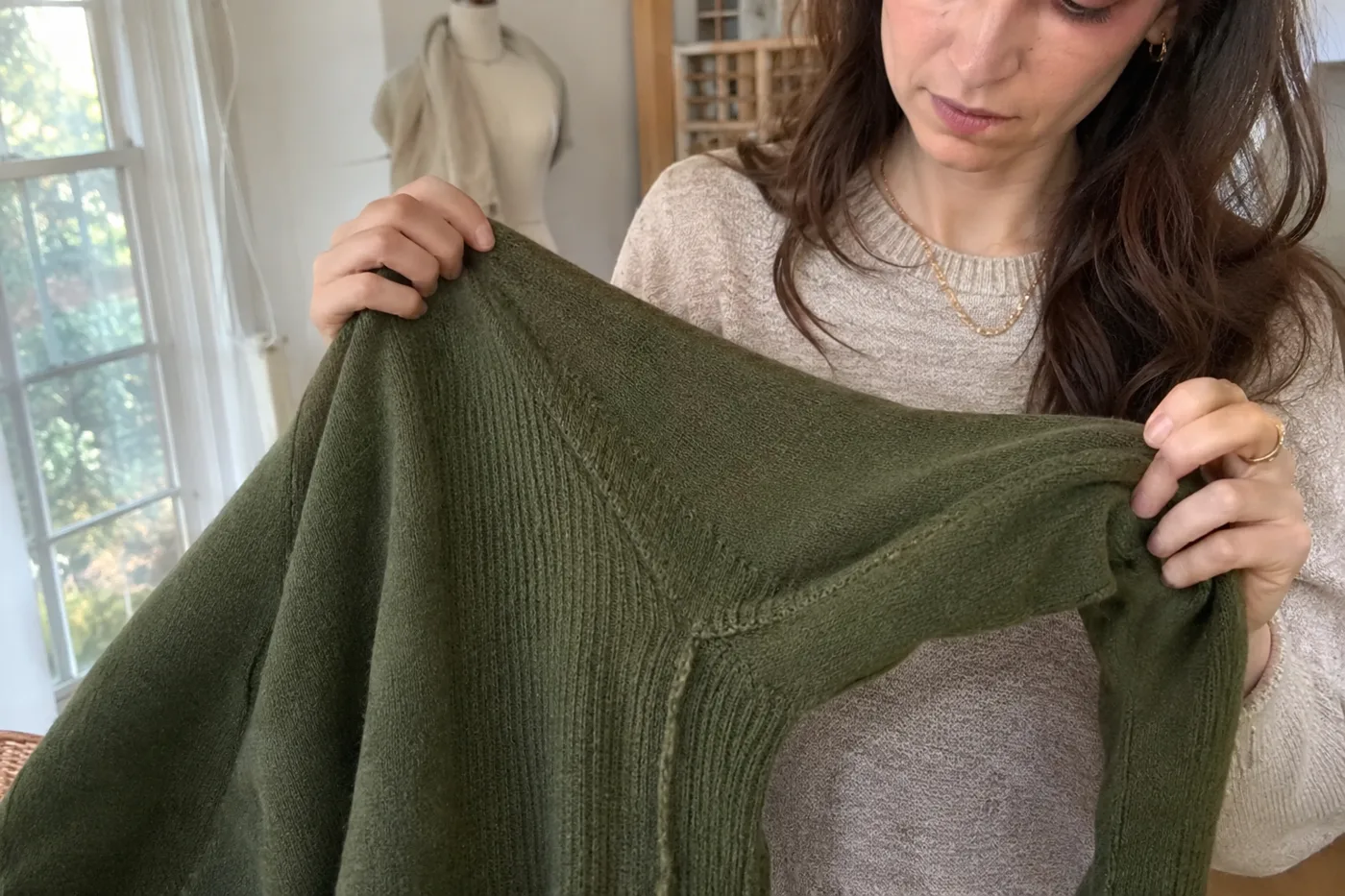
Lift one layer toward indirect light and move slowly across the body. Compare equivalent areas on the two sleeves. A localized transparent oval at an elbow, or a patch where the loops look stretched and sparse, deserves more attention than a few surface pills. Inspect the underarms for a line of open loops and the cuff edges for missing stitches.
Turn the sweater inside out. A previous darn may be strong and worth keeping. If it sits in an obvious position, consider whether you like the visible repair as well. Several holes across a thin area present a different repair problem from one small hole surrounded by healthy knit. Don't pull on a loop to see how far it runs.
Check shape and hand
Place the cuffs together. Look for twisted side seams, a stiff compact body with oddly short sleeves, or ribs that no longer draw back after gentle movement. A felted sweater may still fit someone, but a promise that it can be stretched back to the original size should not decide a purchase. Put it on and bend your elbows. Judge the existing garment.
Surface softness varies with yarn, finishing and wear. A fluffy halo by itself proves little about future durability. Compare the protected inside of a hem with the area touched by a shoulder bag. That comparison gives you a practical idea of how the sweater has been used.
Make a repair allowance
Price the purchase together with any cleaning and repair it actually needs. Ask a knit repairer about a fine-gauge hole if an invisible result matters. For a casual sweater, a contrasting darn may be a perfectly good outcome. Keep the garment separate from clean knits until inspected and cared for according to its label. Once in use, store it clean and folded so its weight doesn't pull the shoulders out of shape.
 Cloth notes
 Cloth notes
 Fit room