When jeans fit your hips but gap at the waist
A gap at the back of jeans can come from the shape of the waistband, the height of the rise or a seat that pulls the jeans out of position when you sit. Try solving each separately before sizing down. A smaller waist helps very little if you lose the room your hips need.
Scovely editors · November 19, 2026
Find out what moves
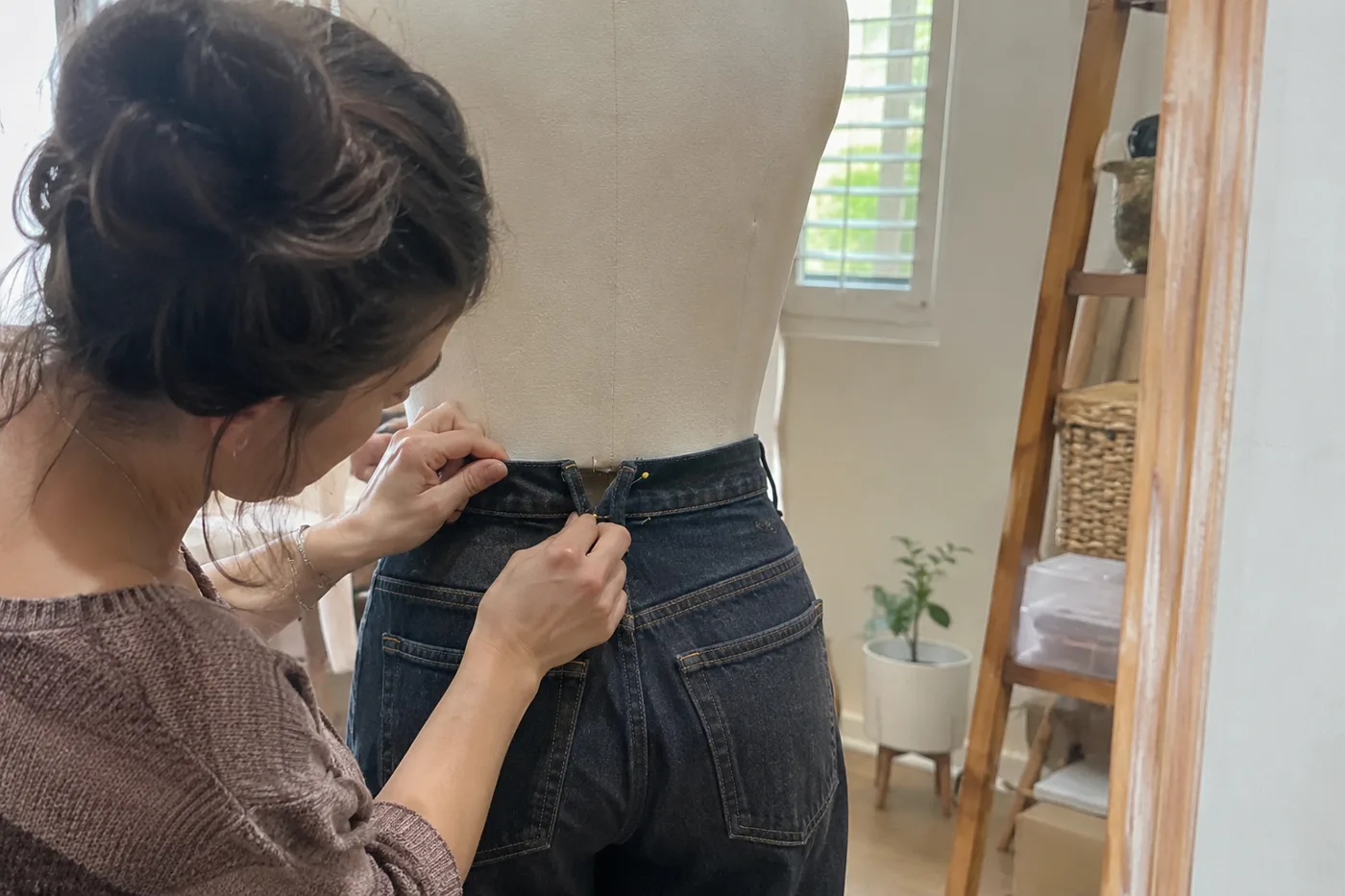
Fasten the jeans without a belt and smooth the front pockets. Walk, sit in a low chair, then stand without tugging the waistband. If it returns to the same height and just the band stands away at the center back, the seat may fit beautifully. Slip two fingers behind the band and pinch a small fold upright. Does the gap disappear while the back pockets stay flat and centered?
Repeat seated. A waistband should leave room for breathing and bending. If the pinch that looks tidy standing feels like a cord around your middle when seated, reduce it. If the whole back drags down when you sit, look for more room through the seat or a different back rise. Sewing the band tighter can make that downward pull more uncomfortable.
Compare cuts in a useful order
Try the same size in a contoured waistband or a cut with a larger difference between hip and waist. Try a different rise next. The same opening can fit quite differently a little higher or lower on your torso. Compare pocket placement, front closure and the position of the side seams each time. A pair that closes easily but makes the pockets flare may still be too tight across the upper hip.
In stretch denim, notice where the stretch is doing the work. If you can fasten the jeans only by pulling the legs and waistband taut, the fit is relying on tension everywhere. With rigid denim, choose the pair that already lets you bend. Break-in can soften folds but offers no dependable way to create missing seat depth.
When an alteration makes sense
Well-fitting legs, level pockets and an isolated band gap are a promising combination. A denim tailor can assess whether to shape the center-back seam, introduce darts or alter the waistband separately. Ask to see the back pinned first. Watch the distance between the pockets and the center seam. A substantial take-in can crowd those pockets or disrupt decorative stitching.
For a pair you wear with a long sweater, a belt may be all you want. Thread it through the loops and inspect the back under the sweater. If it bunches into a thick pleat or digs in when seated, the belt is moving excess fabric into one spot. That is a good reason to explore a different cut even if the front looks fine.
Buying online
Lay your best pair flat, aligned as the seller measures it. Record the waistband, rise and hip measurement at a stated distance below the band. A waist number by itself doesn't describe the curve between waist and seat. Ask whether the seller measured across the relaxed band or stretched it. Keep your seated observation beside the numbers. A measurement can narrow a search, but that movement test decides which pair stays.
 Fit room
 Fit room
 Silhouettes