How to fix a shirt that pulls across the bust
First unfasten the button that pulls. If the fronts spring apart and the fabric smooths across your back, the shirt needs more room at that level. If the edges can overlap comfortably but separate between buttons, the spacing or stability of the placket may be the problem. Those two shirts call for different fixes.
Scovely editors · November 19, 2026
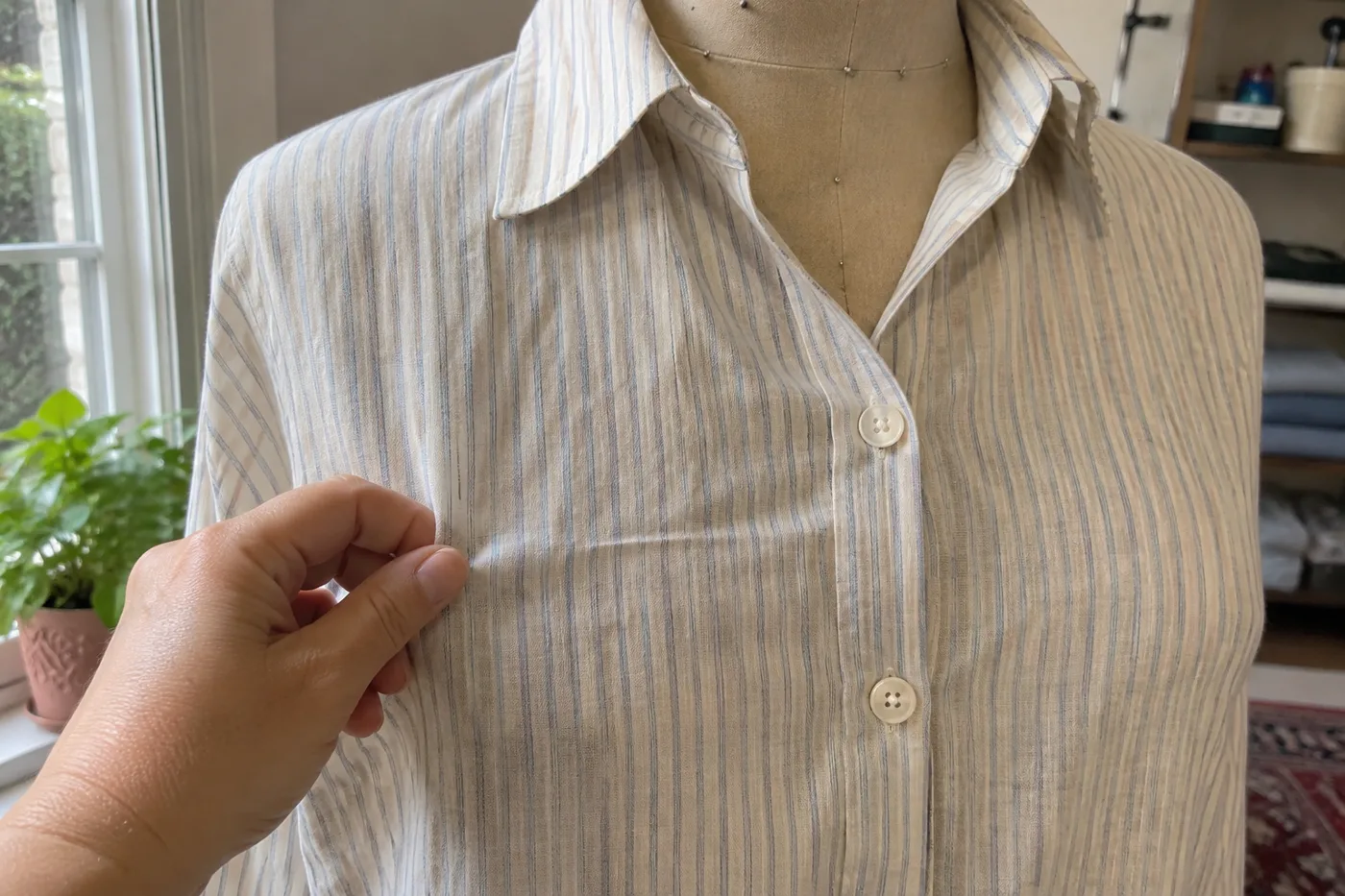
Read the lines across the front
Start with your usual underlayer. A different bra or undershirt can change how a woven shirt hangs. Button the shirt and lower your arms. Watch for diagonal lines radiating from a button and horizontal pulls running into the armhole. Slide a hand inside the front and bring the plackets together from underneath without stretching them. If doing that flattens the fabric against your chest, adding a snap will simply give the tension another place to pull.
Reach for something on a shelf at shoulder height, then sit at a desk. A tiny glimpse between otherwise relaxed plackets is different from a shirt that strains when you write. Check the back at the same time. If your shoulders cannot move forward and the yoke feels tight, a front-only alteration won't give you that movement back.
Keep, alter or try a different pattern
For a single opening between well-spaced edges, mark the gap while wearing the shirt, take it off and try a small concealed snap. Sew it through the inner placket layers where the stitches can stay hidden. Align the shirt's original edges before marking the second half. A snap placed too far across makes the whole placket jog sideways. Test it in daylight before committing.
Moving the existing button closer to the edge can help a very small mismatch, provided the buttonhole remains supported and the placket still overlaps fully. It gains very little room. If the stripes stop matching or the edge of the underplacket appears, restore the old position. A safety pin may make a quick diagnostic on a shirt laid flat, but a pin under tension in a shirt you are wearing is a poor permanent fastening.
What to look for at the rack
Try a fuller bust cut, a shirt with darts, or a larger size that can be taken in at the waist. Look first at the shoulder and collar, then at the shirt's shape below. A good dart introduces volume where it is needed and falls short of the fullest point. If a higher or lower dart distorts the fabric even when you unbutton it, compare a different pattern. For an intentionally loose shirt, check the sleeve length and cuff circumference after sizing up.
One useful comparison: photograph two shirts from the side as well as the front. One may appear generous from the front yet pull the hem sharply upward over the bust. The better candidate gives the fabric a route down the body and keeps the placket closed while you move. Wear it tucked and untucked before deciding where a tailor should remove any extra cloth.
 Fit room
 Fit room
 Silhouettes