Measure a coat sleeve without mixing up the routes
To measure coat sleeve length, first identify the route used by the seller: shoulder seam to cuff, neck to cuff, or underarm to cuff. Lay a well-fitting coat flat and repeat that exact route. Then try the coat over your usual layers; a matching tape measurement alone cannot confirm the fit.
Scovely editors · November 20, 2026 · Updated 2026-11-20
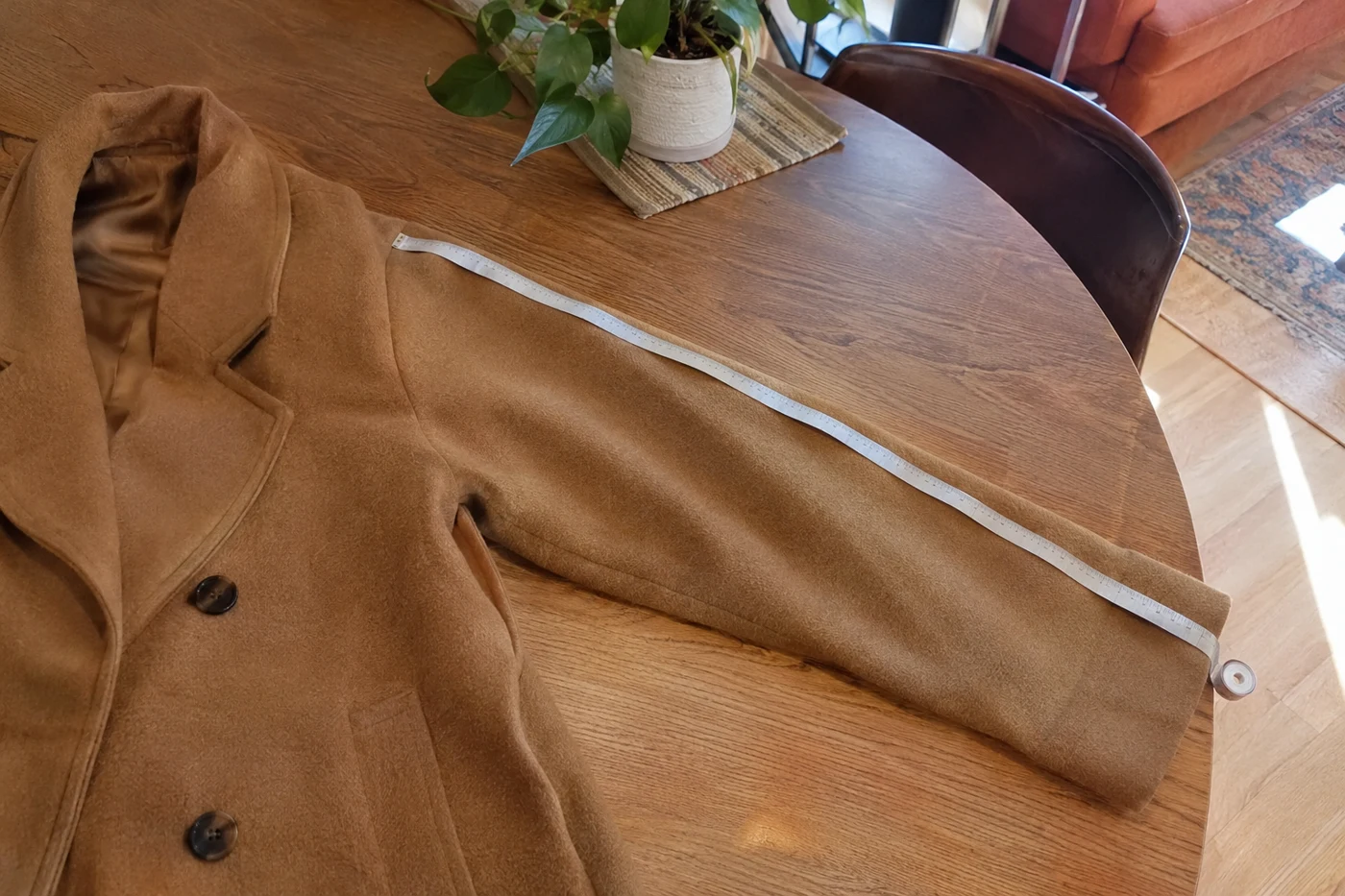
Which sleeve measurement do you need?
A sleeve number needs a starting point. A set-in sleeve joins the body near the shoulder tip. A raglan sleeve runs up toward the neckline. A dropped shoulder places the join farther down the upper arm. Measuring each sleeve from its nearest seam produces different numbers even when the cuffs finish at the same place on you.
The retailer Standard & Strange uses the shoulder seam for conventional sleeves and the collar edge for raglan sleeves. Those instructions belong to that retailer's charts. They are not a conversion formula for every other brand. In particular, a neck-to-cuff measurement does not tell you the length of the sleeve piece alone.
| Listing says | What to record | What to clarify |
|---|---|---|
| Shoulder to cuff | Shoulder/sleeve junction to finished cuff edge | Along outer edge or straight line? |
| Neck to cuff | Named neck point through shoulder toward cuff | Center back or side neck? |
| Underarm sleeve | Underarm junction to cuff along inner sleeve | Where exactly does the tape start? |
| Body sleeve length | The wearer's arm along the maker's diagram | This is not a finished garment dimension |
If a secondhand listing gives only “sleeve 25,” ask for the unit and a photograph showing both tape endpoints. Do not assume that the number means inches or that the seller measured a garment rather than a person.
Measure a set-in sleeve without pulling it longer
Choose a coat that already works over your winter clothes. Empty the pockets and place it on a clean, broad surface. Smooth the body gently. Let the sleeve lie in its natural direction rather than dragging it into a straight line across the table. A shaped elbow should retain its bend.
- Find the junction between shoulder seam and sleeve head. Ignore decorative topstitching nearby.
- Place the zero end of a flexible, non-stretch tape at that junction.
- Follow the route shown by the seller, usually the upper outside of the sleeve, to the finished cuff edge.
- Record whether a turned-back cuff was unfolded or left in its worn position.
- Lift the tape away, reset the coat and measure again. If the numbers disagree, check the route before averaging anything.
Measure the other sleeve separately. A previous alteration may have left the sides unequal. Record the actual figures without correcting them to what you think a symmetrical coat ought to measure. Photograph the tape placement so the seller or tailor can reproduce it.
How do you measure a raglan coat sleeve?
A raglan coat has no conventional shoulder-tip seam. Follow its maker's diagram. Some use a collar-to-cuff route, while others use the inner sleeve. For example, Besnard's raglan coat guide specifies an underarm route. That is a different measurement from the collar route above; neither number should be substituted for the other.
Where a chart begins at the center back, note the exact neck seam point, continue across the shoulder and follow the illustrated sleeve route. Keep the tape against the fabric without stretching it. Do not add an estimated shoulder allowance to an underarm measurement. The shape between those points changes from coat to coat.
For a dropped shoulder, record both the stated sleeve route and how far the shoulder extends on the garment. A short sleeve piece can still cover your hand because part of its reach comes from the body. Our shirt cuff fitting checks explain why the opening at the wrist also changes the apparent length.
Compare two coats using a measurement record
Use a small record rather than one number: coat name, shoulder construction, start point, route, finish point, units, left sleeve, right sleeve and layers worn. Keep the measurement photograph with it. This separates a physical difference from a difference in measuring practice.
As an illustrative example, a coat recorded as 25 inches from the shoulder and another recorded as 34 inches from center back cannot be ranked as shorter and longer. Remeasure both by the same route first. If one then reaches farther on the table but rides up when worn, inspect its shoulder and upper sleeve room. The longer number has not resolved the movement problem.
When shopping online, send your record and ask the seller to reproduce it on the garment. A comparison photo is more useful than asking whether something “fits true to size.” Save the reply before deciding whether an alteration is affordable.
Check the cuff with the coat on
Wear the sweater, shirt and watch you normally use. Fasten the coat as intended, let your shoulders settle and rest both arms. Notice the cuff position, then reach forward as if holding a steering wheel. Return to rest and check whether the sleeves fall back into place. Read the layered coat fitting guide if the whole body lifts during this movement.
A winter coat can cover more wrist than a suit jacket. Your preferred coverage, gloves and cuff construction decide the useful endpoint; there is no single exposed-shirt rule for every coat. If the sleeve twists or pulls diagonally, use the jacket shoulder inspection before requesting a simple shortening.
When should a tailor take over?
Have the tailor pin the proposed length with your arms resting, then demonstrate your normal reach. Working buttonholes, a strap near the cuff or a shaped lining can limit how much can be removed neatly. Letting a sleeve down also depends on the existing allowance and any old crease or wear line. Do not cut a cuff because a seller's chart disagrees with your shirt size.
Take your measurement record to the fitting. Ask where the alteration will be made, whether both sides need the same adjustment, and what details will move. Approve the resting position and the movement together. The useful outcome is a coat you can wear over your real clothes, with a measurement you can reproduce for the next purchase.
Watch the technique
Johann Ruttloff · measuring guide for jacket and shirt
Play demonstration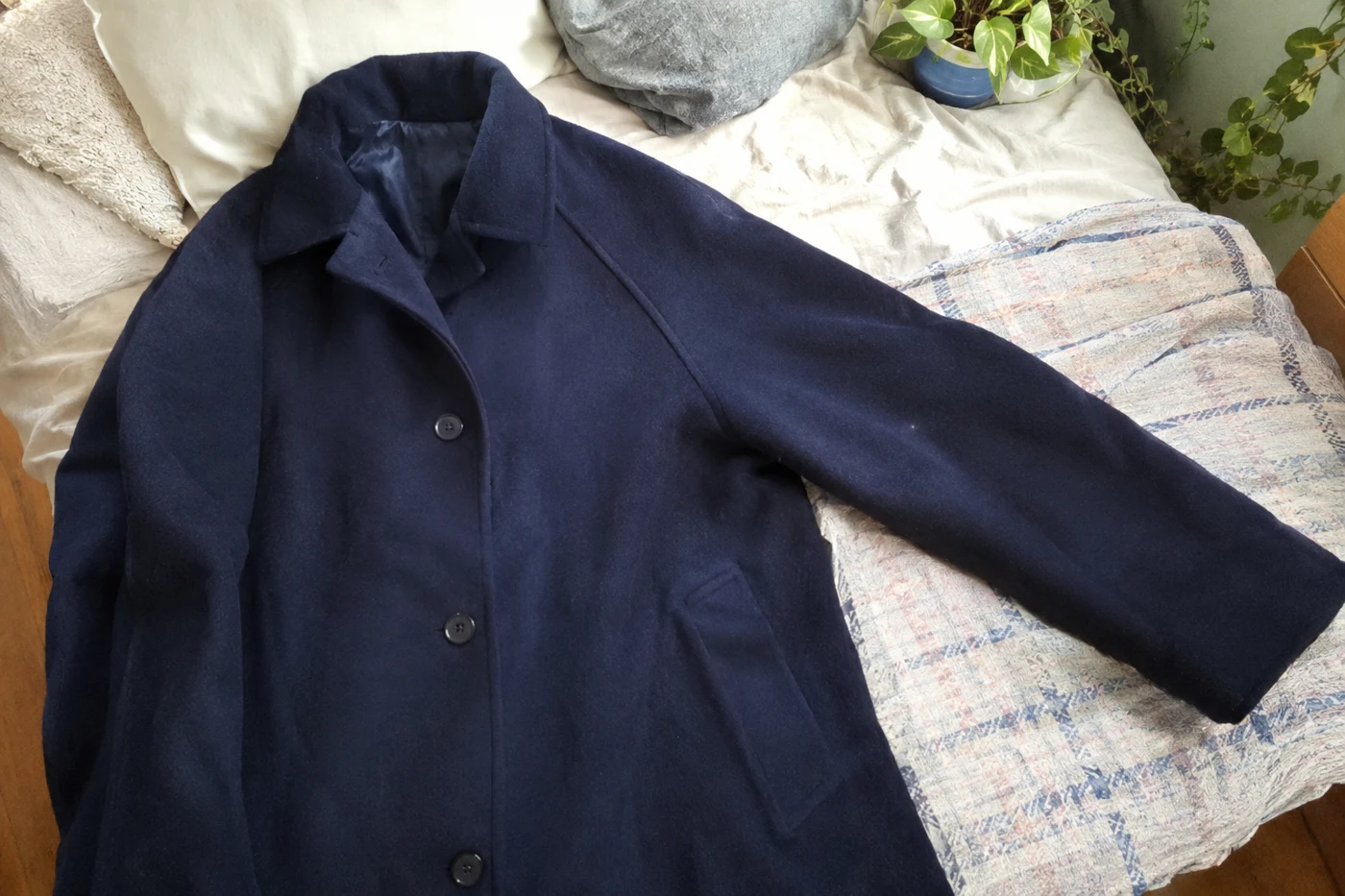
 Fit room
 Fit room
 Fit room