Where should trousers break over your shoes?
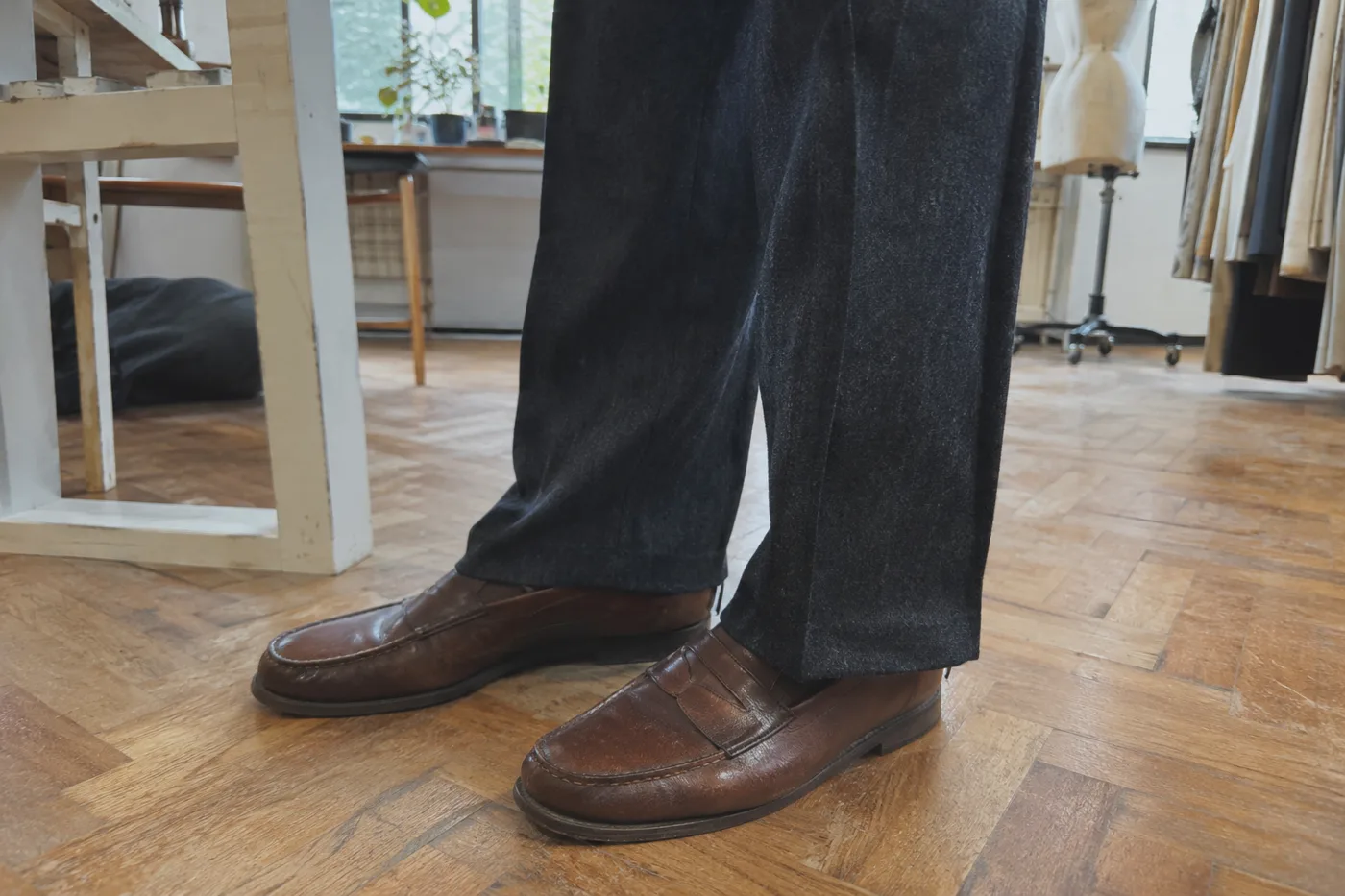
The break is the fold that forms where the front of a trouser leg meets the shoe. Decide on the shoes first. A hem that skims the tongue of a loafer can stack on a high sneaker or swing clear of a low-cut pump. The useful measurement is the one you take while wearing the pair.
Scovely editors · November 19, 2026
Start at the waistband
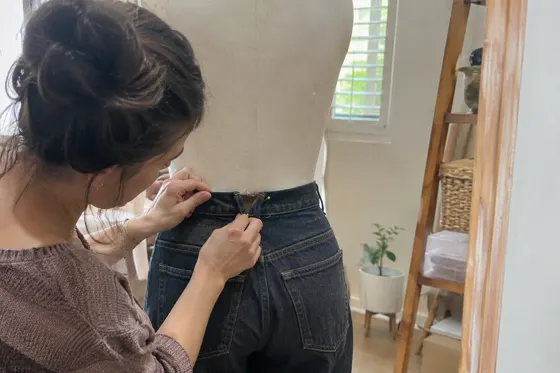
Pull the trousers to the position where they stay when you walk, fasten them, then sit and stand. If the waistband slides down, the apparent extra length is coming from the top. A belt can hold it temporarily while you test the hem. It cannot rescue a rise that feels uncomfortable in a chair. Empty the pockets before judging the line.
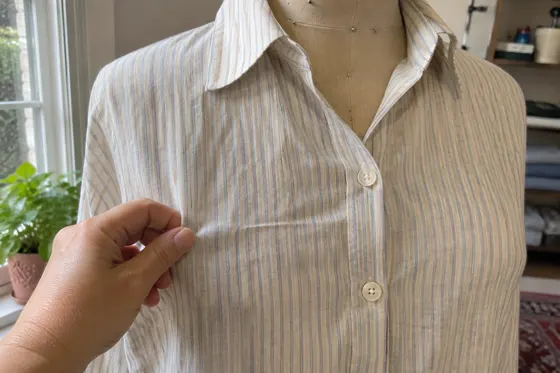
Look at the crease below the knee. If it turns sideways higher up the leg, or the cloth catches on a calf, the hem alone cannot make it fall straight. Lift the cloth off the calf and release it. If the same wrinkle returns before the trouser touches the shoe, try a wider lower leg.
Try three lengths on one leg
Turn the excess inside. Clip or baste it at the front, back and both sides so the fold stays level. Start with the front just clearing the shoe. Walk away from a mirror and come back. That clean, uninterrupted line works especially well with a tapered leg. Check how much ankle shows when you take a stair. A standing photograph will hide that difference.
Lower the fold until it just rests on the shoe. A small bend at the front gives the leg a little ease without a heavy stack. Let it down again and observe what happens at the heel. A broad leg may drop almost straight around a shoe while a narrow opening of the same length collapses into folds on top of it. There's no universal inseam for either result.
Take the fitting to the tailor
Bring the actual shoes. Ask the tailor to pin both legs while you stand naturally. Looking down pulls the trousers up at the back, so use a mirror or ask someone else to photograph the heel. Note whether the back edge catches between the heel and the floor. A long, sweeping line loses its appeal when you have to pick up the hem to turn a corner.
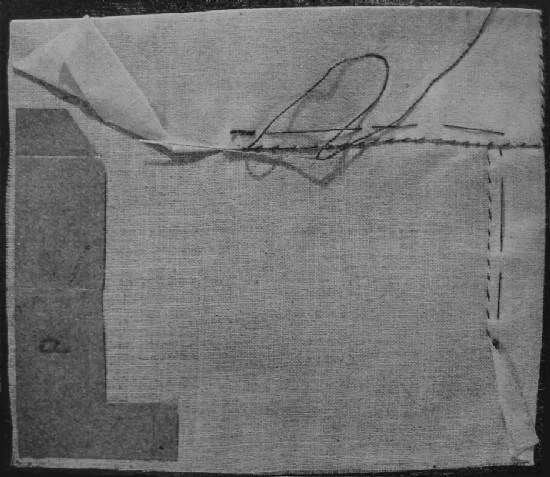
Ask how much cloth will remain inside. On tapered trousers the turned-up portion may be narrower than the leg where it will be stitched. A deep turn-up pulled tight can leave a visible ring. The alteration may need the seam opened or the hem finished with a facing. For a pair worn with two shoe heights, pick the combination you reach for most. Forcing one length to serve both often compromises the one you actually wear.
A fitting-room decision
Shorten if the leg falls freely until it reaches the shoe and pinning the hem fixes the bunching. Try another cut if folds remain at the calf with the hem held clear. Keep the length if the back clears the ground and you like the way the front moves on an ordinary stride. Record the shoe name with the finished inseam so you can reproduce that result on a similar cut.
 Fit room
 Fit room
 Fit room