How to check the waist seam of a dress
The sewn waist of a dress can sit high, low or on your own waist by design. Judge whether it lands where the shape of the dress needs it to land. A fitted bodice that bunches over its seam calls for a different solution from a relaxed dropped-waist dress with a straight body.
Scovely editors · November 19, 2026
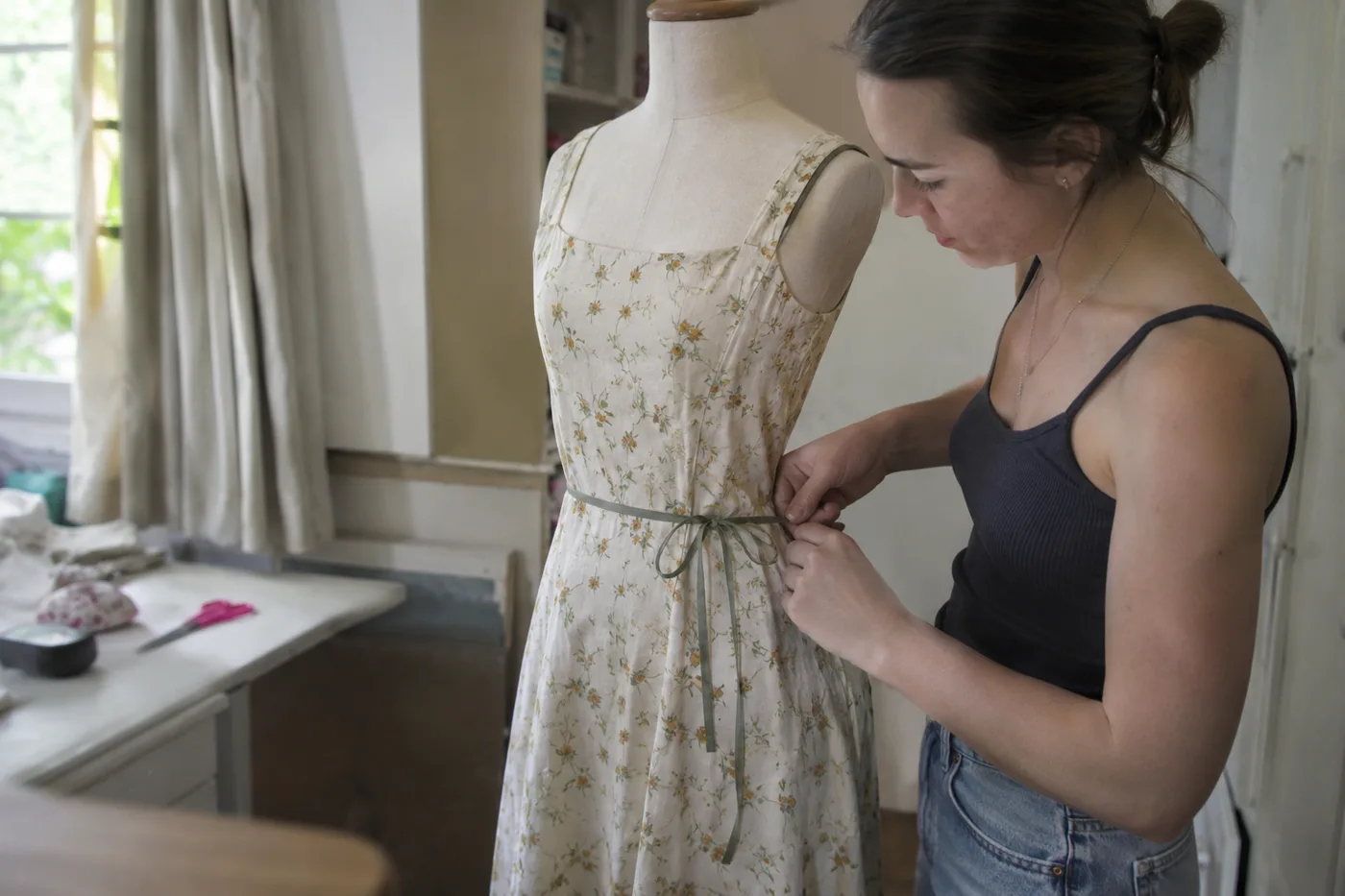
Locate your reference point
Tie a soft ribbon loosely around your torso and bend gently to either side. Let the ribbon settle, then straighten. It gives you a repeatable fitting reference, even if you prefer to wear your clothing slightly above or below it. Put the dress on and identify its actual waist seam. A printed stripe, belt loop or elastic casing may sit somewhere else entirely.
Compare front, back and sides at eye level. If the seam is high everywhere and the bodice feels short under the arms, try a longer torso option. If it rises only in front and the skirt tips forward, the bodice may need additional length or room over the bust. Lowering the entire seam would also lower a back that already fits.
Watch the bodice in motion
Sit on a chair and stand up again. Slide a hand between dress and body at the waist. A bloused bodice should be able to float above its band. A tailored bodice should settle without a shelf of fabric folding at the lower back. A dress can have the correct vertical length but still climb because the hip below it is too tight. Ease the skirt away from the hip and see where the waist falls.
If the dress has a belt, take it off for this check. Belting can make a loose dress look fitted while concealing a seam that pulls upward. Once you know how the garment sits, replace the belt and decide if you prefer the result. A belt is a styling choice unless the pattern relies on it for support.
Compare alterations on a hanger and on the body
To preview a shorter bodice, baste a shallow horizontal tuck above the waist with the dress off. Stop if the tuck would run into a zip, pocket or shaped panel. Wear it briefly and inspect the neckline and armholes as well as the waist. Taking fabric out at the shoulder instead can pull an armhole or dart too high.
Lengthening a finished fitted bodice often depends on the seam allowance, lining and available matching fabric. A contrasting waistband can be deliberate, but changes both silhouette and proportion. For a purchase, try another torso length first. For a cherished garment, ask a tailor to pin both an alteration and a styling-only solution before agreeing to cut it.
A useful measurement for next time
Measure a dress that fits from the high shoulder point beside the neck to its front waist seam, then repeat on the back. Record the fabric and whether the bodice is intended to blouse. Those notes tell an online seller more about the dress you need than overall length alone. Two dresses can reach exactly the same place on the shin while placing their waist seams very differently.
 Fit room
 Fit room
 Cloth notes