Can you wash a lined linen jacket at home?
Wash a lined linen jacket at home only when its sewn-in care instructions permit it. Linen in the shell does not establish that the lining, interfacing, buttons and shoulder structure can survive the same treatment. Read the whole label first, then check the jacket's construction before choosing a cleaning method.
Scovely editors · November 22, 2026 · Updated 2026-11-22
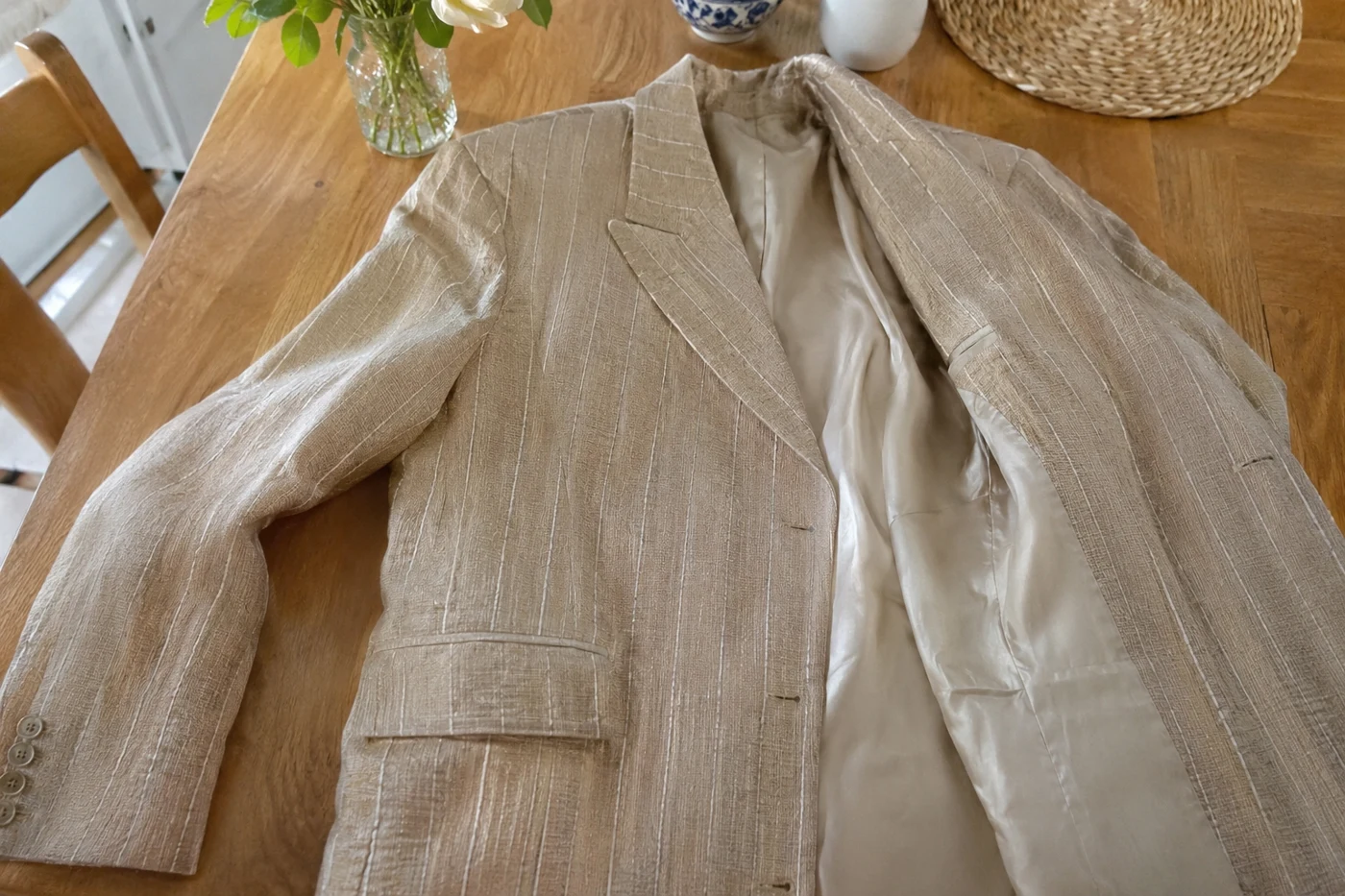
What does the label actually permit?
Find the care label inside a side seam or pocket. Photograph all of it, including warnings about drying, ironing and trim. The fiber label describes what the cloth contains; it does not supply a cleaning method. A jacket sold as pure linen can still have a separate lining and concealed supports.
The FTC care-label guide distinguishes a recommended dry-cleaning process from an explicit warning against washing. For your own jacket, follow the stated method and ask the manufacturer about unclear instructions. A missing label is a reason to seek advice, not permission to select a cold cycle. A small damp spot test cannot tell you whether the entire jacket will retain its shape.
Why is a lined blazer different from a linen shirt?
The shell and lining move independently in a well-made jacket. They may respond differently to cleaning. A lining that becomes too short can pull the sleeve opening or hem inward; distortion in the support beneath a lapel can show through the outer cloth. You cannot inspect every concealed component without opening the garment.
Feel gently for shoulder padding and compare the lapel with the loose fabric at the back. Do not peel layers apart to find out whether interfacing is fused. For the original wearing shape, use the blazer shoulder checks. Record any existing ripples before cleaning so you do not mistake an old fit problem for fresh damage.
| Observation | Decision before adding water |
|---|---|
| Label explicitly permits home washing | Follow its temperature, process and drying instructions together |
| Label says dry-clean only or do not wash | Keep it out of a home wash and take the label to a cleaner |
| Label permits professional wet cleaning | Ask a professional; this is a separate process |
| Label missing, structure unknown | Contact the maker or a garment-care specialist |
| Lining already torn or pulling | Have the damage assessed before routine cleaning |
If washing is allowed, what should you record first?
Lay the dry jacket on a clean table without stretching it. Photograph the front, back and inside hem. Note the shoulder-to-cuff length along one consistent route, the resting back length and where the lining finishes inside the sleeve. These observations create a comparison record; they are not specifications for stretching a washed jacket back into size.
Empty the pockets and remove only accessories designed to detach. Follow instructions concerning closures and removable trims. Keep the jacket separate from rough items that could catch the lining. Use the process named on its label rather than treating hand washing as automatically gentler than every machine setting. Handling a heavy wet garment can itself distort a soft shape.
When the instructions specify hand washing, support the garment rather than twisting it to remove water. Follow its drying directions, keeping the jacket's weight supported as needed. Do not introduce tumble heat simply because the jacket feels nearly dry. If the label offers no clear drying route, clarify that before beginning the wash, while you can still choose another method.
Can you press the shell on the linen setting?
Choose the permitted ironing treatment from the garment label. The GINETEX symbol reference explains that the ironing limit belongs to the article, not merely the named fiber. Check the lining and trim before applying the same heat everywhere. Use a clean press cloth where appropriate and first check an inconspicuous area within the allowed treatment.
Preserve the rounded shape of lapels instead of flattening their fold into a knife edge. Avoid pressing pocket bags through to the front. Stop if the surface changes or an internal layer starts to bubble. The distinction between a fiber and a fabric structure in our silk and satin guide helps explain why a shiny lining should not receive a treatment chosen from its appearance alone.
The demonstration below explains care labels in general. It does not establish that your particular lined jacket is washable.
What if it only needs freshening?
Hang a dry jacket with room around it in a ventilated place, away from direct heat and strong sunlight. Brush away loose surface debris gently with an appropriate clean clothing brush. Airing may improve a stale smell but does not remove every stain or replace cleaning. Avoid spraying an unknown stain with a succession of household products.
Tell the cleaner what caused a stain and what has already touched it. Point out weakened seams, loose buttons and any old lining damage. Do not conceal a home treatment that changed the stain: that information affects what the cleaner tries next. A jacket that is still damp should not be shut into a crowded wardrobe.
Check the result before the next wear
Once fully dry and finished as directed, compare the same photographs and measurement routes. Put the jacket on over the same shirt. Check whether the cuffs roll inward, the lining pulls when reaching, or the lapels now ripple while the jacket is unfastened. Do not force a changed layer to match by cutting tacks or stretching seams.
For example, a sleeve that looks shorter only because its lining is pulling needs a different assessment from an evenly shorter shell. Take the before-and-after record to a repairer. Before buying another jacket, the linen inspection guide gives checks for weave, wear and lining that can help you choose a care routine you can maintain.
If the full care label permits the test, record marked spans with the fabric shrinkage calculator. It compares repeated observations without assuming that the shell, lining and interfacing will move together.
Watch the technique
Textile Vlog · Garment Care symbols Explanation || How to Read Clothing Care Labels
Play demonstration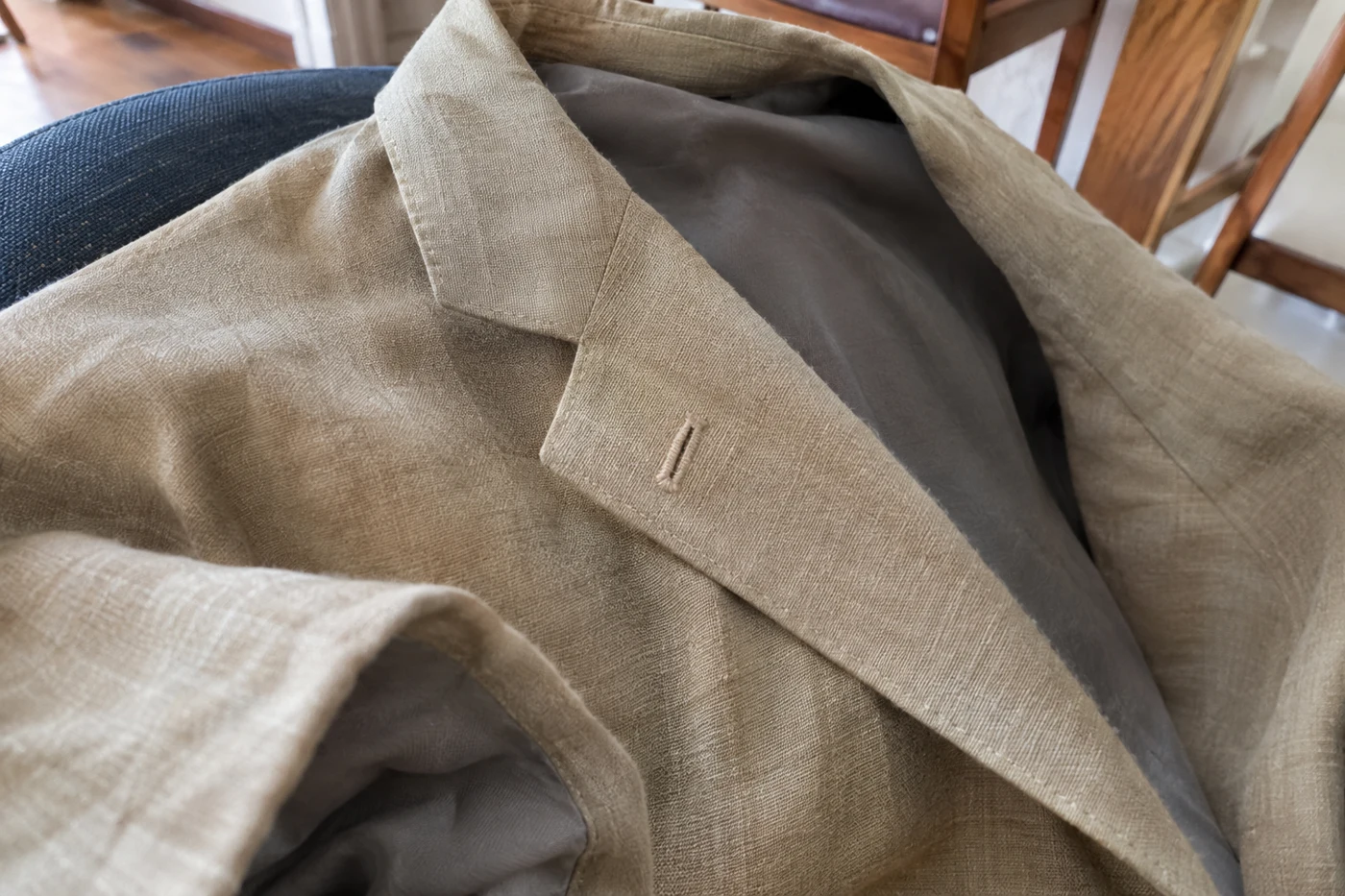
 Cloth notes
 Cloth notes
 Fit room